
The first time flying private feels nothing like boarding a commercial flight — and that gap is wider than most travelers expect. Private aviation in the U.S. has grown by over 40% since 2020, yet millions of potential flyers still assume it's out of reach or shrouded in complexity. That growth has been consistent year-over-year: in 2022 alone, the number of private flights increased by 11% compared to the prior year. L33 Jets This guide breaks down exactly what first-time private jet travelers need to know: how the booking process works, what the experience looks and feels like from the moment you arrive at a private terminal, which aircraft types suit different trip lengths, and what everything actually costs. Each step is covered below, whether you want to save time, travel with a group or understand how charter works before you book.
How Is Flying Private Different From Commercial Travel?
Flying private is fundamentally different from commercial travel in four key ways:

- Schedule control — Departure times revolve around the passenger, not an airline's timetable.
- Direct routing — Most charter flights operate point-to-point, eliminating layovers entirely.
- Private terminals — Passengers depart from Fixed Base Operators (FBOs), not commercial concourses.
- Typically no TSA screening lines — Security at FBOs is usually streamlined, with most passengers cleared in minutes.
Together, these differences make the trip much shorter. A commercial journey from door to gate can consume two hours or more before the aircraft even pushes back. When you fly private, that same process often takes about 15 minutes.
Despite the perception that private aviation is commonplace among the wealthy, research from McKinsey found that only one in 10 U.S. households and businesses that can afford to fly privately had actually done so before the pandemic — leaving more than one million potential flyers yet to make their first private flight. Private Jet Card Comparisons
Private aviation also unlocks airports that commercial flights never serve. The United States has roughly 5,000 public-use airports, and scheduled airlines operate out of fewer than 500 of them. Private jets access the remaining thousands, placing travelers closer to their actual destination — a mountain resort, a coastal town, a rural business facility — without a lengthy drive at the end. The United States dominates global private aviation infrastructure: among the top 10 markets worldwide, the U.S. accounts for 75% of privately owned aircraft, with approximately 13,775 registered private jets in North America alone. VistaJet / Wealth-X Jet Traveler Report
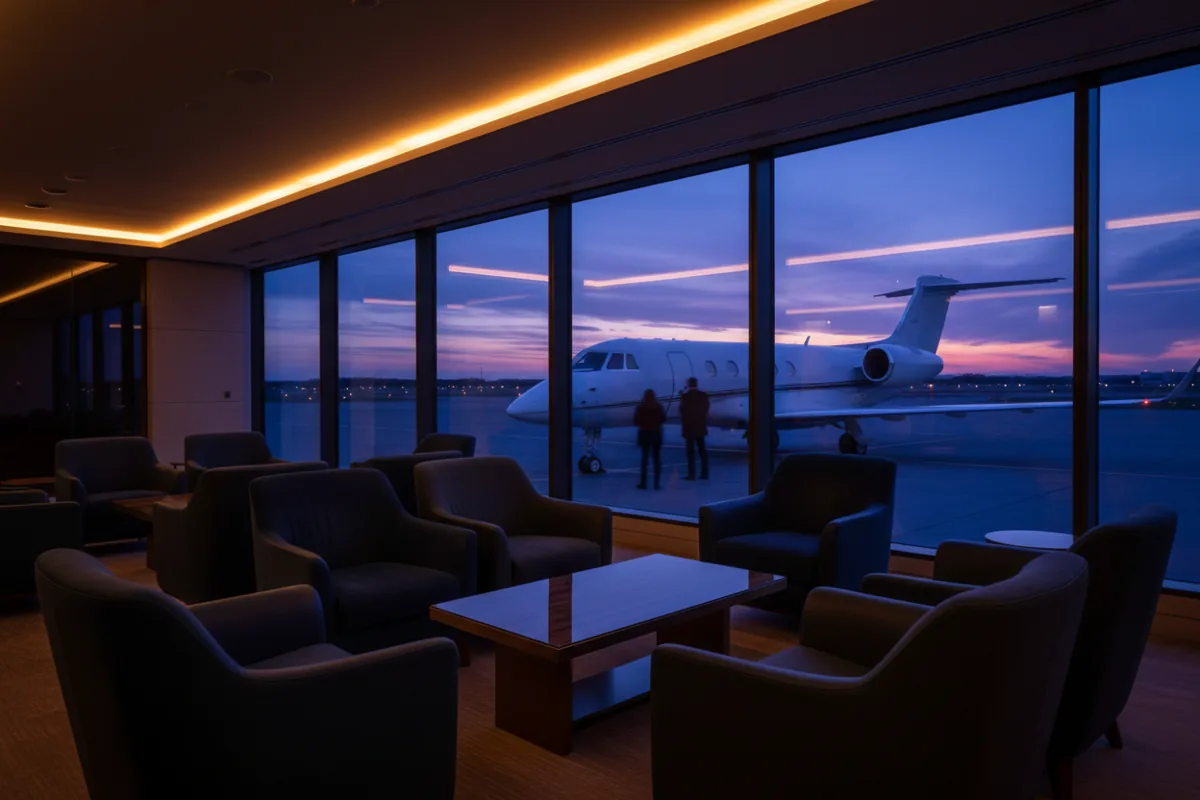
The experience at an FBO reinforces this efficiency. VIP lounges replace crowded gates. Pilots greet passengers by name. The aircraft is staged and ready before arrival. For first time flying private travelers, the absence of the usual friction points is often the most striking part of the private jet check-in process.
Which Access Model Is Right for You?
Private aviation offers four primary access models. Choosing the right one depends on how frequently you fly, how much capital you want to commit upfront, and how much flexibility you need.
| Access Model | Best For | Typical Cost Structure | Key Drawback |
|---|---|---|---|
| Jet Card | Occasional to moderate flyers | Fixed hourly rate, prepaid hours | Minimum hour purchase required |
| Fractional Ownership | Frequent flyers needing guaranteed aircraft | Share purchase + monthly management fees | High upfront capital commitment |
| On-Demand Charter | Infrequent travelers prioritizing flexibility | Per-flight pricing | Availability varies by market |
| Broker Booking | First-timers wanting guidance | Marked-up charter rates | Potential hidden fees |
Jet Card and Membership Programs
A Jet Card lets you prepurchase a block of flight hours at a fixed hourly rate — typically between $4,000 and $12,000 per hour depending on aircraft category. Many providers lock in that rate regardless of fuel surcharges or repositioning costs, which keeps billing predictable. Jet Card and Membership Program options work best for travelers who fly four to twenty-five hours per year and want predictable pricing without a long-term ownership commitment.
Fractional Ownership
Fractional Ownership means purchasing a share of a specific aircraft — commonly one-sixteenth or one-eighth — which entitles you to a set number of flight hours annually with guaranteed availability. NetJets and Flexjet are the dominant providers in this space. The entry cost for a fractional share starts around $500,000, making it the right fit for executives and business travelers flying 50-plus hours per year who need an aircraft ready on short notice.
On-Demand Charter
On-Demand Charter is the most flexible entry point into private aviation. You book a flight directly when you need it, choosing the aircraft and itinerary without any upfront financial commitment. This model suits first time flying private travelers who want to experience private jets before committing to a card or ownership structure. First-time flyers exploring on-demand charter can also take advantage of empty leg flights — repositioning flights sold at discounts of 50–75% off standard charter rates, sometimes bringing the cost in line with a premium commercial business class ticket. Flyius BLADE offers on-demand helicopter and private jet charter access in the NYC metro area, a practical starting point for East Coast travelers trying private aviation for the first time.
Working With a Broker vs. Booking Directly
Brokers provide access to a wide network of operators and handle the search process on your behalf, which adds convenience — but that convenience carries a cost. Brokers typically layer a margin of 10–20% on top of the operator's base rate, and fee structures are not always disclosed upfront. Booking directly with a managed fleet operator gives you more transparency on aircraft, crew and pricing. For a detailed breakdown of the process, how private jet booking works is a practical resource before you commit to either path.
What Aircraft Will You Fly On?
Aircraft size determines comfort, range, and cost — so matching the right jet to your journey is one of the most practical decisions a first-time private flyer makes.
Light jets like the Cessna Citation CJ2 and CJ3 seat four to six passengers and excel on short hops under two hours. Cabins are compact but efficient, making them ideal for regional trips where speed matters more than stretch room.
Midsize jets offer noticeably more room. The Cessna Citation Latitude offers a stand-up cabin and transcontinental range, while the Bombardier Challenger series handles longer routes with room for six to nine passengers in genuine comfort.
Large-cabin jets — including the Bombardier Challenger 300 — suit coast-to-coast or international travel, with full galley service and space to work, sleep, or hold a meeting at altitude.
When traveling in a group or covering serious distance, aircraft category shapes the entire experience. A useful starting point is understanding what you need to book a private jet before narrowing down the right aircraft class for your route.
What Happens on the Day of Your Flight?
The day-of experience for first-time private flyers begins at a Fixed Base Operator, not a commercial terminal. FBOs are dedicated private aviation facilities — often smaller, quieter buildings located on a separate section of the airport. Walking in, travelers encounter a reception desk, a staffed lounge with seating, refreshments, and sometimes shower facilities. The atmosphere is closer to a hotel lobby than an airport gate.
Plan to arrive 15–30 minutes before departure. That window is standard across most operators.
Documentation and the Passenger Manifest
Every passenger must appear on a passenger manifest submitted to the operator before departure. Bring a government-issued ID. TSA screening is lighter than commercial, but documentation is non-negotiable.
Boarding and Departure
A staff member escorts passengers directly from the VIP lounge to the aircraft on the ramp. There are no gate queues. Pilots greet travelers at the stairs, and departure follows within minutes of boarding.
What Is the Onboard Experience Actually Like?
The onboard experience varies significantly depending on which aircraft category you fly. A light jet like the Cessna Citation CJ2 or CJ3 seats four to six passengers in a compact cabin — functional and private, but not sprawling. Standing upright is limited, and the noise level is noticeable at cruise altitude. Step up to a midsize jet like the Citation Latitude and the difference is immediate: more headroom, wider seats, and a quieter ride. A Bombardier Challenger represents a genuinely different category — club seating, a full stand-up cabin, and a level of comfort that rivals business class on a wide-body commercial aircraft.
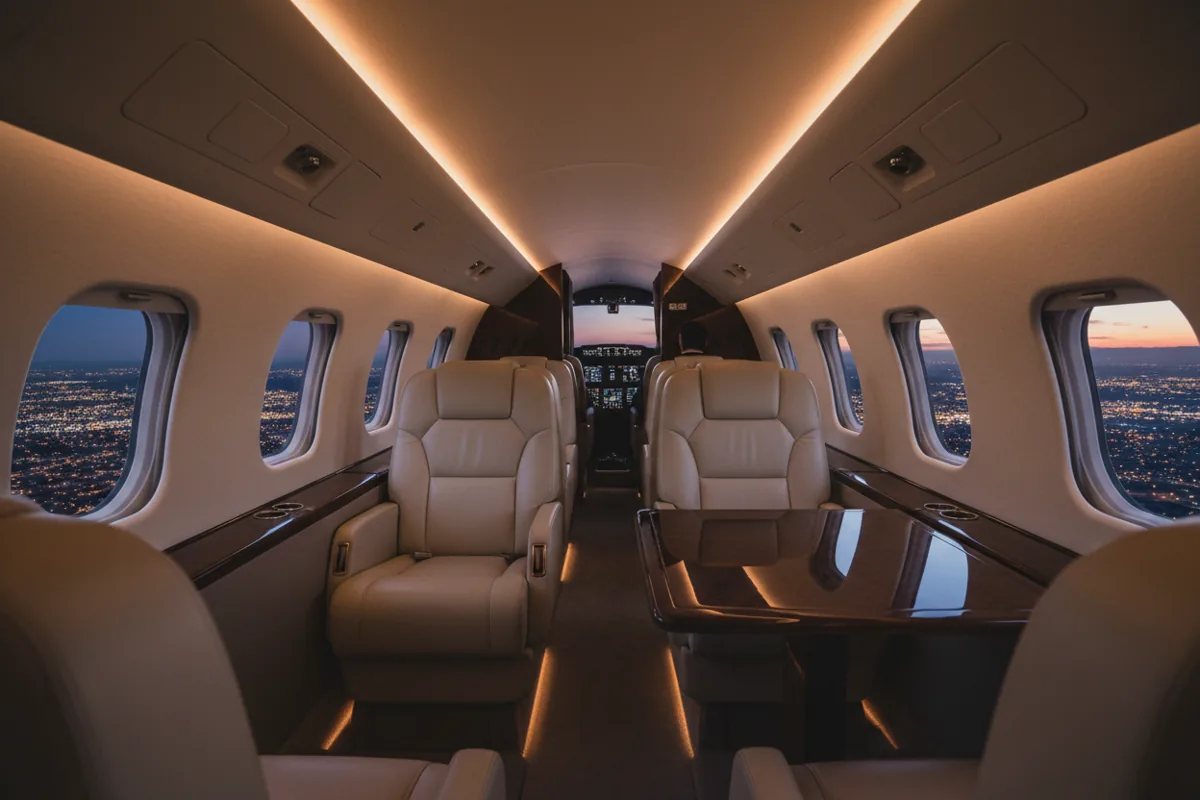
Catering is customizable on most charter flights. Operators arrange meals, snacks, and beverages based on your preferences submitted during booking. Wi-Fi availability depends on the aircraft and operator, so confirm this detail directly when booking.
One detail that surprises many first-time flyers: the pilots are accessible. There is no curtain between you and the flight deck on smaller aircraft, and communication is direct and relaxed. Private aviation removes the anonymity of commercial travel — the crew knows who you are before boarding.
What Surprises First-Time Private Flyers — And How to Avoid Them
The most common mistake first-time private flyers make is focusing on the hourly rate rather than the total trip cost. Repositioning fees — charged when an empty aircraft flies to your departure airport — can add hundreds or thousands of dollars to the final invoice. Light jets like the Citation CJ2 or CJ3 also carry strict weight and baggage limits, so confirm payload capacity with your operator before packing. When booking through broker-assembled flights rather than fully managed fleets, safety oversight and aircraft consistency vary significantly — a fully managed operator maintains its own aircraft and crews, while a broker sources from third parties. Understanding whether you need a broker to book a private jet is a smart first step. One genuine advantage private aviation offers over commercial: weather delays rarely strand you — routing flexibility means pilots can often adapt in real time.
How to Book Your First Private Flight (Step-by-Step)
Booking your first private flight takes six straightforward steps. Define your trip details first — route, travel dates, passenger count, and baggage requirements. Next, choose the access model that fits your budget, whether on-demand charter, a Jet Card, or a Membership Program. Request quotes from at least three operators or brokers, then verify each operator's FAA air carrier certificate and safety record through ARGUS or Wyvern ratings. Confirm the passenger manifest early, as most operators require it 24–48 hours before departure. Finally, review payment schedules and cancellation terms before signing anything — penalties vary significantly between providers. Booking directly with an established operator avoids broker markups and gives you a single point of contact throughout the process. Knowing how far in advance to book a private jet also protects against limited aircraft availability, especially during peak travel periods.
Is Flying Private for the First Time Worth It?
Flying private for the first time feels very different from commercial travel. From the moment travelers bypass commercial terminals and step into a private terminal, the contrast is immediate — no crowds, no queues, and a crew that knows your name before wheels up.
The core takeaways are straightforward: understand your access model (on-demand charter, jet card, membership program, or fractional ownership), match the aircraft to your trip, and vet your operator carefully. Budget honestly — light jets start around $3,000–$5,000 per flight hour, and hidden fees exist if you book without asking the right questions.
Whether you fly once a year or plan to make private aviation a regular part of your travel, flexibility and control over your schedule are the consistent rewards. If you are weighing timing and cost, look at last minute private jet booking options too.
Do the research, then book with confidence.