
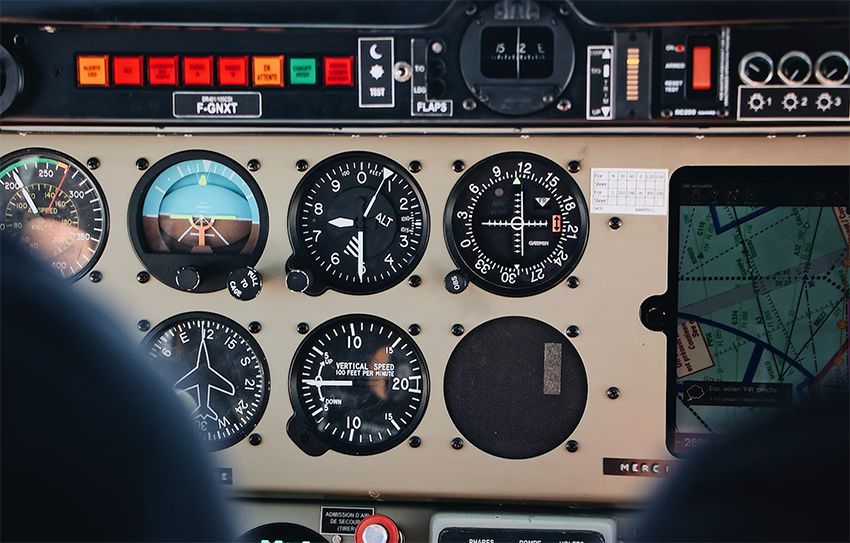
The Purpose of IFR
Under Instrument Flight Rules (IFR), pilots follow a set of regulations to fly aircraft by instruments in low visibility. This allows pilots to land and take off regardless of bad weather. IFR is used by experienced pilots and is crucial for commercial airlines.
The regulations of IFR ensure flight safety by providing a clear path of travel and reducing the risk of mishaps.
What is Visual Flight Rules (VFR)?
IFR requirements
IFR requirements, with an instrument rating and aircraft requirements, need to be understood.
Instrument rating permits navigating by instruments. Aircraft requirements set the standards for IFR flight. Let’s explore both to learn more.
Instrument rating
Instrument flight rules (IFR) refer to the minimum requirements for flying an aircraft in low visibility conditions. Pilots require an instrument rating (IR) to fly IFR, which involves specialized training and testing that goes beyond the standard private or commercial pilot certificate. The IR permits pilots to fly in weather conditions that would be impossible with visual flight rules alone.
To acquire an instrument rating, pilots must undergo rigorous training on instrument procedures, navigation, and communication. They are also required to pass a written exam and complete a certain number of flight hours with an instructor and solo flying time. Once certified, IR holders are authorized to fly under any IFR conditions – even if they cannot see outside the cockpit.
One unique aspect of IFR flying is the use of air traffic control services to monitor and coordinate aircraft movement. This helps ensure safety and accuracy in often-crowded airspace. It also requires pilots to be highly proficient in radio communication and following ATC instructions.
According to the Federal Aviation Administration (FAA), approximately 135,000 general aviation aircraft are currently licensed in the United States. Of those planes, only about 28% have been equipped with avionics systems capable of supporting IFR operations – underscoring just how specialized this type of flying remains in today’s aviation industry.
Aircraft requirements
To conform to Instrument Flight Rules (IFR), aircrafts must meet certain criteria. These requirements entail a specific set of equipment, including radios, navigation systems and instruments. The aircraft must also be maintained to strict guidelines to ensure safe operation during IFR conditions.
Aircraft operating under IFR must also have effective communication with Air Traffic Control (ATC) and accurate information on weather conditions. This is achieved through reliable radio communication systems and advanced aviation weather technology. Compliance with these requirements supports safety for everyone onboard the aircraft.
It’s important that pilots are familiar with all IFR requirements before taking off. They should continuously check weather forecasts, update flight plans accordingly and inform ATC immediately in case of any deviations or unexpected circumstances. Additionally, pilots should be proficient in using the required equipment for stress-free performance during IFR flights.
IFR procedures give pilots a fixed sequence to follow from departure to arrival.
How do helicopter services in NYC operate safely in low-visibility conditions?
Helicopter operations in dense airspace like New York City rely heavily on Instrument Flight Rules to maintain safety during low visibility, cloud cover, or adverse weather. Helicopter operators, including the licensed carriers that fly scheduled BLADE service between Manhattan and major NYC airports, rely on IFR procedures for precise navigation, continuous air traffic control coordination and predictable routing. Flying under IFR when conditions require it lets helicopter services keep flying safely when visual references are limited.
Where is IFR most commonly used in real-world aviation?
Instrument Flight Rules are most commonly used in commercial aviation, air cargo operations, medical evacuation flights, and helicopter services operating in complex or congested airspace. IFR allows aircraft to depart, cruise, and land safely in weather conditions that would otherwise restrict visual flying. In busy regions with frequent weather changes and heavy air traffic, IFR ensures standardized procedures that keep aircraft separated and on predictable paths.
IFR Procedures
Becoming an IFR expert requires knowing the multiple scenarios and using a structured approach. We’ll discuss IFR in depth, looking at Departure, En-route, and Arrival procedures. These parts deconstruct the steps of IFR flying for a secure and pleasant journey.

Departure Procedures
When it comes to preparing for an Instrument Flight Rules (IFR) flight, understanding the Process of Departure is vital. Here’s how you can do it:
Obtain a Clearance from Air Traffic Control (ATC): Before takeoff, ATC must approve your IFR flight plan and issue a clearance.
Navigate the Departure Route: During departure, make sure to follow the approved route as per the clearance received from ATC.
Comply with Speed and Altitude Restrictions: To promote safety in crowded airspace, comply with speed and altitude restrictions provided by ATC until further instruction is given.
Communicate Effectively: Maintain communication with ATC throughout your departure – report any changes in heading, altitude or other information that may be relevant.
Understanding these steps will help you stay organized during pre-flight checks and concentrate on flying safely during departure. Remember to always have an up-to-date copy of relevant charts and information on hand before commencing your journey.
Knowing what to expect during departure procedures can save time while preparing for IFR flights. The next phase is en-route flying.
En-route Procedures
During Instrument Flight Rules (IFR), En-route procedures describe the methods and practices followed by pilots when flying at cruising altitude between takeoff and landing. Pilots rely on their instruments to navigate and avoid other aircraft while adhering to air traffic control instructions. This phase of the flight is critical, as pilots must maintain situational awareness and be prepared to adjust course or altitude quickly.
En-route procedures entail monitoring navigational aids, controlling the aircraft’s heading, altitude, airspeed, engine performance while keeping in touch with Air Traffic Control (ATC). Pilots must be able to follow a designated route while maintaining specific minimum altitudes. Weather changes can happen abruptly at this altitude, from clear skies to thunderstorms. Therefore, attention should be paid closely to weather reports before flying.
Pilots should also prepare for potential loss of communication with ATC by understanding Unicom frequency for each airspace they fly over as they approach different controlled areas. In case of radio failure, pilots should call ATC by landline phone or report an emergency on the 121.5 MHz VHF Guard frequency.
Arrival procedures follow the same structured approach.
Arrival Procedures
When arriving at an airport, certain procedures must be followed by pilots operating under Instrument Flight Rules (IFR). These protocols ensure safety and accuracy during arrival. Pilots must first identify the assigned STAR (Standard Terminal Arrival Route) for their destination airport and follow it precisely. After that, they will typically receive vectors from air traffic control to maneuver the aircraft onto the final approach course for landing.
It is important to maintain proper speed, altitude, and distance from other traffic during these procedures. Pilots should also be aware of any relevant NOTAMs (Notices to Airmen) or weather conditions that may impact the approach. In addition, pilots must be prepared to execute a missed approach if necessary.
To ensure smooth operations during arrival, pilots should familiarize themselves with specific arrival procedures for each airport they fly to and stay attentive to any changes or updates. Also, maintaining clear communication with air traffic control is crucial for a safe and accurate approach. By adhering to these guidelines, pilots can navigate arrivals smoothly while ensuring maximum safety and efficiency.
The main benefit of IFR is that pilots can fly safely through low visibility.
Why IFR matters in congested and urban airspace
In congested and urban airspace, IFR plays a critical role in maintaining order and safety. Aircraft operating near major airports or city centers must follow precise altitudes, routes, and timing to avoid conflicts with other traffic. IFR provides air traffic controllers with the structure needed to manage multiple aircraft simultaneously, reduce collision risk, and maintain smooth traffic flow. This is especially important in metropolitan regions where both fixed-wing aircraft and helicopters operate in close proximity.
Benefits of IFR
Instrument Flight Rules (IFR) are essential for safe and efficient aviation operations in adverse weather conditions or reduced visibility. They provide pilots with a set of rules and procedures that enable them to navigate the skies relying solely on instruments and air traffic control guidance.

Here are four benefits of IFR:
Increased Safety: IFR reduces the risk of accidents as pilots navigate through clouds, fog, or other weather disturbances that can obscure their visibility.
Optimal Routing: IFR allows for more precise routing, which minimizes fuel consumption and reduces flight time, resulting in significant cost savings.
More Flexibility: IFR enables pilots to choose alternative routes or landing sites, helping to avoid weather-related delays or closures of airports.
Specialized Training: IFR requires specialized training, which enhances the pilot’s skills, making them more employable in the aviation industry.
Moreover, pilots must ensure that they have proper training to operate under IFR, with current licenses and medical certificates. Additionally, they must follow defined procedures and maintain communication with Air Traffic Control at all times to ensure safe navigation. It is crucial to note that pilots must follow specific procedures to transition from IFR to the Visual Flight Rules (VFR) when appropriate.
According to the Federal Aviation Administration (FAA), approximately 56% of US passenger and cargo flights operate under IFR, making it an essential component for aviation operations today.
Challenges of IFR
The two main IFR challenges are weather limitations and ATC communication. Necessary preparations must be made to navigate unpredictable weather. Clear communication with ATC keeps the flight safe and efficient.
Weather limitations
The intricacies of weather in IFR:
Handling weather is a crucial aspect of Instrument Flight Rules (IFR). Pilots must be well-versed in interpreting the meteorological reports to ensure safe flying conditions. Flight safety depends on accurate, timely weather information. The complexity of weather changes requires pilots to have sharp situational awareness and understand its impact during IFR operations.
Weather Alternatives for Safer Flying
Collaboration with automated aviation weather systems such as NEXRAD can provide critical information and analysis on potential hazards along the route. It presents updated data on precipitation intensity, cloud altitude, and more crucial details essential for decision-making mid-flight. Pilots may also explore alternate routes, waypoints or carefully plan their approach considering certain focal points like thunderstorm cells, fog areas or heavy rains.
No Room for Errors
Pilots must manage their flight path accordingly when dealing with unfavorable weather conditions during IFR operations. A deviation from the prescribed procedures can lead to a mid-air collision or a crash. Accurate maintenance of altitude limits, speeds and radio frequencies plays a significant role in avoiding these high-risk scenarios.
Elevate your IFR Game!
Handling weather is an essential part of safe instrument flying, and that includes knowing when not to fly. Intensive training through reputed institutions will enable you to gain insights into effective decision-making techniques that put your passenger’s safety first. With strong weather-management skills, pilots can stay ahead of the threats that adverse weather brings.
The second challenge is communication with ATC.
ATC communication
Clear and effective communication with Air Traffic Control (ATC) is crucial for instrument flight rules (IFR) flying. Pilots should use concise phraseology, speak slowly and clearly, and follow ATC instructions promptly. The ability to listen to radio transmissions attentively while also performing complex aircraft procedures is essential.
Pilots must accurately read back all clearances, including altitude assignments and route changes, to avoid any misunderstandings. If a pilot is unsure of an instruction or clearance from ATC, they should ask for clarification without hesitation. Additionally, pilots should report any deviations immediately to ATC.
It is important to note that ATC communication procedures may vary between countries and regions. Before starting a flight in an unfamiliar location, it is advisable to study the local procedures carefully.
To ensure effective ATC communication in IFR flying, pilots can practice using simulation software or join online aviation communities where experienced pilots offer advice and guidance on proper phraseology and procedures. Continuously improving one’s listening skills can help the pilot keep pace with rapid radio transmissions that require critical attention.
FAQs about What Is Instrument Flight Rules (IFR)
What are Instrument Flight Rules (IFR)?
Instrument Flight Rules (IFR) are a set of rules and regulations that govern the procedures and requirements for flying an aircraft when visibility is poor. IFR procedures require pilots to use instruments and radios to navigate and communicate with air traffic control.
What are the advantages of flying under IFR?
Flying under IFR provides several advantages, such as enhanced safety margins, precise navigation, and the ability to operate in weather conditions that would otherwise ground the aircraft. IFR flying enables pilots to fly in clouds, haze, and other reduced visibility conditions safely.
What are the requirements for flying under IFR?
To fly under IFR, pilots must hold a valid instrument rating. They must also have completed the necessary IFR flight training from a certified instructor and passed the applicable FAA IFR knowledge tests. In addition, the aircraft must have the necessary equipment and instrumentation to operate in IFR conditions.
What is the difference between IFR and VFR?
IFR (Instrument Flight Rules) and VFR (Visual Flight Rules) are two fundamentally different sets of rules that govern how pilots operate aircraft. VFR flying relies on visual references and good weather conditions, whereas IFR flying uses instruments to navigate, communicate, and fly the aircraft in limited visibility conditions.
What are the different types of IFR approaches?
There are several types of IFR approaches, including precision and non-precision approaches. Precision approaches use electronic signals to provide pilots with highly accurate altitude and directional information during landing. Non-precision approaches rely on visual cues, radio signals, and ground-based instruments to navigate the aircraft to the runway.
Why is IFR important for air travel?
IFR is important for air travel because it enables aircraft to operate safely and efficiently in poor visibility conditions. Without IFR procedures, many flights would be grounded due to weather conditions, leading to significant delays and cancellations. IFR also enhances safety margins by providing pilots with enhanced navigation and communication capabilities.