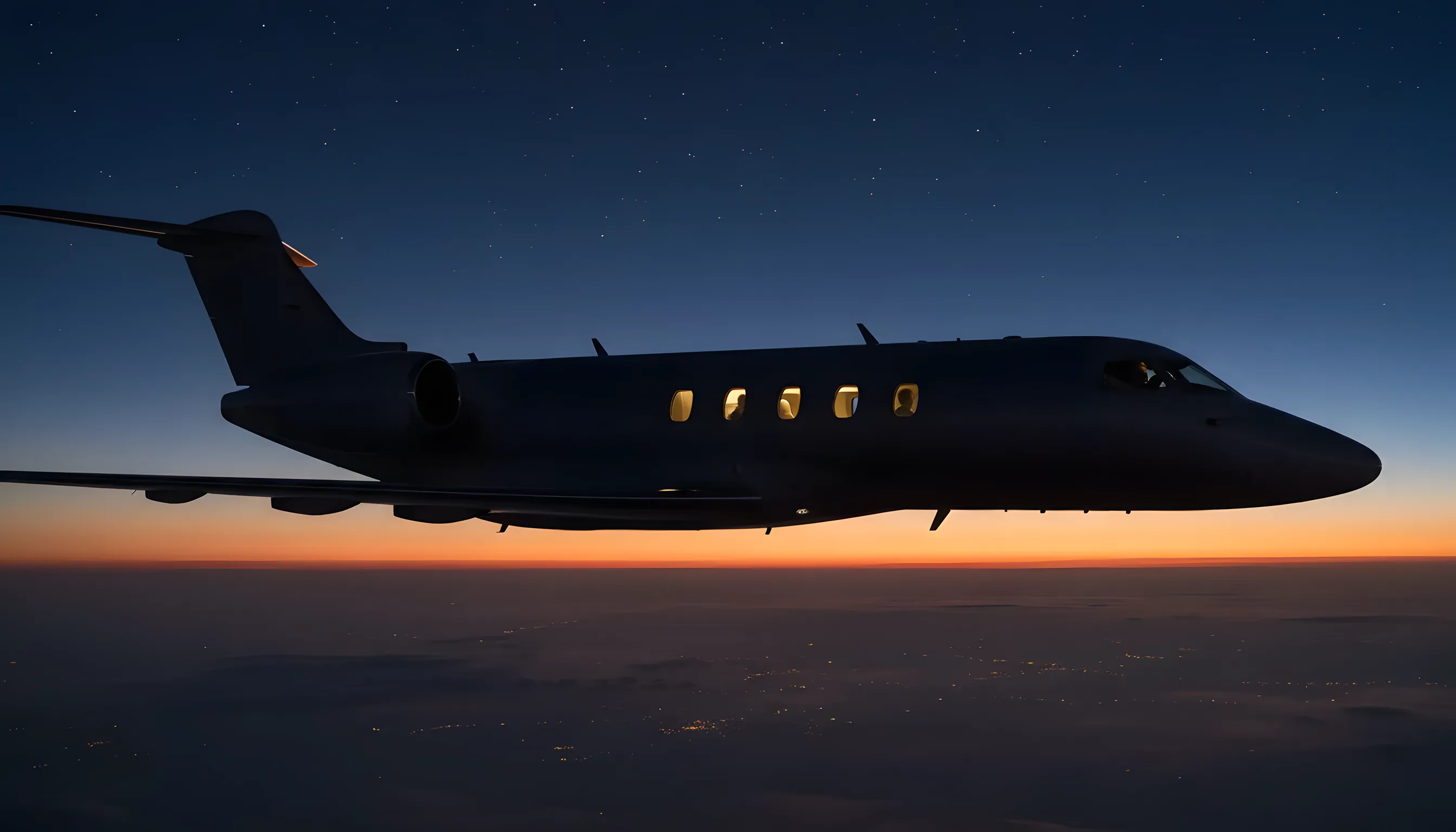
Most private jets cruise well above the weather, in the same band of airspace as airliners and often higher. How high a given flight goes depends on the aircraft's certified ceiling, the length of the trip, the weight on board, the weather and the altitude air traffic control assigns.
This guide explains what those limits are, which jets can fly highest, and why a pilot might choose a lower altitude than the aircraft allows.
Altitude of Private Jets
Every jet has a maximum operating altitude, often called its ceiling, set by the manufacturer and approved at certification. That number is the top of what the aircraft can do, not the altitude of every flight. On a short hop the jet may never reach it. On a long trip the crew may climb in steps as fuel burns off and the aircraft gets lighter.
Here are the published maximum operating altitudes for a range of current and recent business jets:
| Aircraft | Category | Maximum operating altitude |
|---|---|---|
| Cessna Citation Mustang | Very light jet | 41,000 ft |
| Embraer Phenom 100EX | Light jet | 41,000 ft |
| Embraer Phenom 300EV | Light jet | 45,000 ft |
| Embraer Praetor 500E | Midsize jet | 45,000 ft |
| Bombardier Challenger 3500 | Super midsize jet | 45,000 ft |
| Dassault Falcon 2000LXS | Large jet | 47,000 ft |
| Learjet 45XR | Midsize jet | 51,000 ft |
| Cessna Citation X | Super midsize jet | 51,000 ft |
| Gulfstream G700 | Ultra-long-range jet | 51,000 ft |
| Bombardier Global 6500 | Ultra-long-range jet | 51,000 ft |
| Dassault Falcon 8X | Ultra-long-range jet | 51,000 ft |
Two things stand out. Even the smallest jets in the table can climb to 41,000 feet. And 51,000 feet is the top of the range for business jets: no current model in the table is certified higher.
What Is Considered High Altitude for Private Jets?
There is no single official cutoff. In practice, "high altitude" for a business jet means the flight levels above about 40,000 feet. Every jet in the table above can reach 41,000 feet, but only the ones certified to 45,000 or 51,000 feet have room to climb well beyond it, above more of the traffic and weather.
Altitude alone does not tell you the cabin experience. Jets are pressurized, so the air inside feels like a much lower altitude. Bombardier, for example, states that the Global 8000 holds a cabin altitude of 2,691 feet while cruising at 41,000 feet.
Factors Affecting the Altitude of Private Jets
Jet Performance
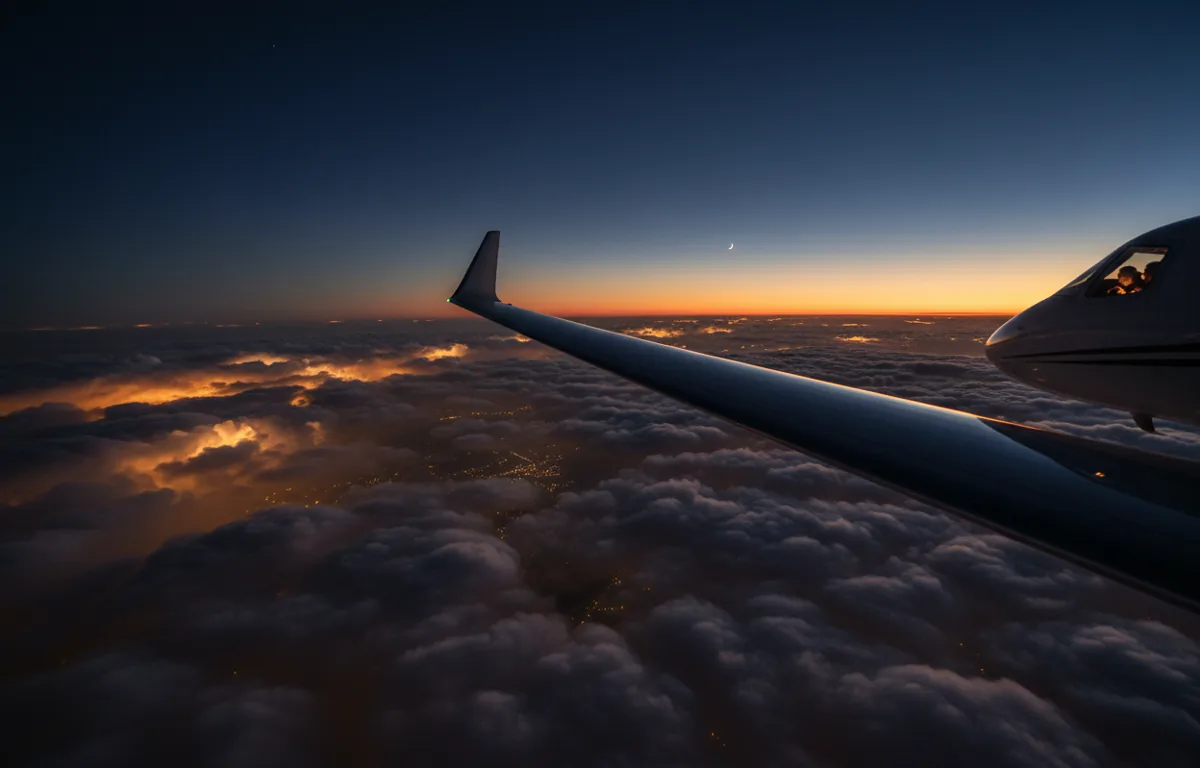
The aircraft sets the outer limit. Its certified ceiling, engines and wing determine how high it can go and how quickly it can get there. Weight matters too. A jet that has just taken off with full fuel tanks and a full cabin may need to start lower and climb later in the flight.
Trip length also shapes the plan. Climbing takes time and fuel. On a short flight the jet may spend most of its time climbing and descending, so the crew picks a lower cruising altitude. On a long flight, time at a high, efficient altitude pays off.
Weather Conditions
Weather often decides the final number. Crews adjust altitude to stay clear of thunderstorms, turbulence, icing conditions and strong headwinds. A favorable tailwind at one altitude can make it worth flying lower or higher than planned. When conditions change en route, the pilots ask air traffic control for a new altitude.
How pilots determine the best cruising altitude
Before the flight, the operator's pilots weigh the aircraft's weight, the forecast winds and temperatures, the expected traffic and the route. They file a requested altitude in the flight plan, and air traffic control approves it or assigns another. During the flight, they can request changes as the jet burns fuel or the weather shifts.
Typical Altitudes for Private Jets
Light Jets
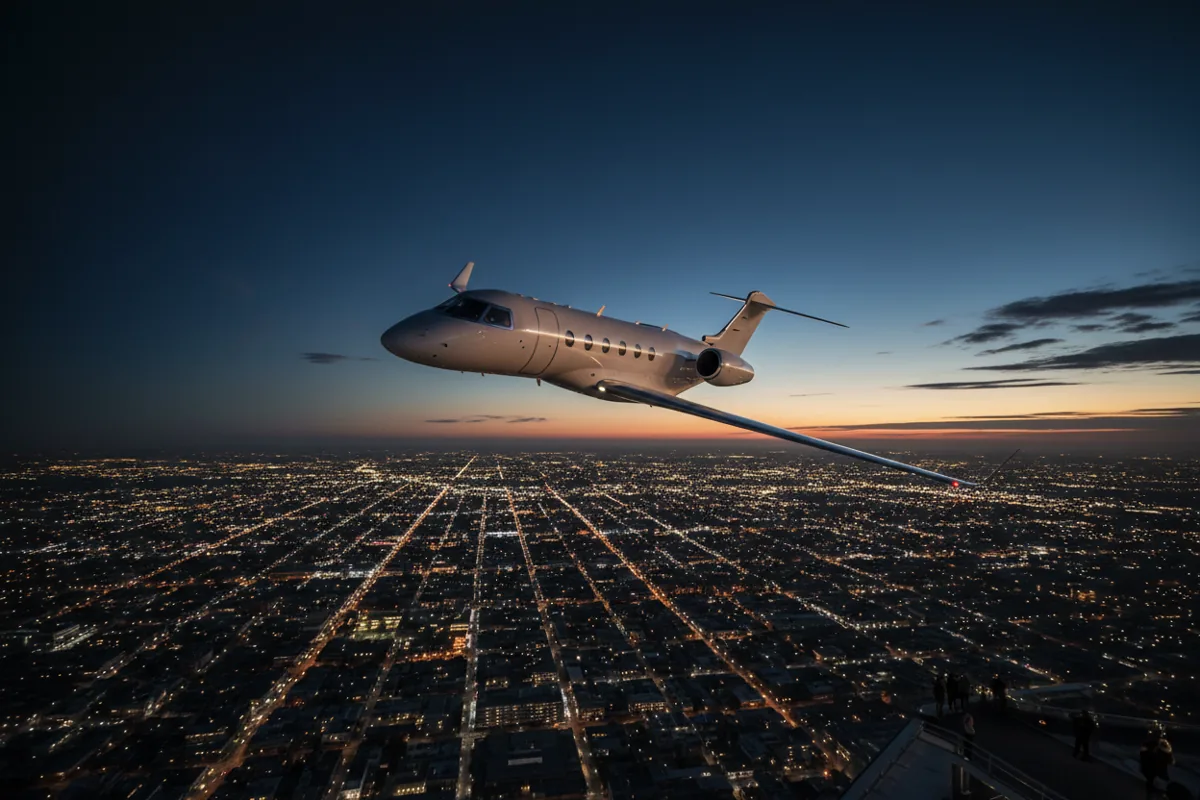
Light jets such as the Citation Mustang and Phenom 100EX are certified to 41,000 feet, and the Phenom 300EV to 45,000 feet. Light jets usually fly shorter trips, so many of their flights cruise below their ceiling.
Midsize Jets
Midsize jets such as the Praetor 500E are certified to 45,000 feet. Some older designs go higher: Bombardier lists the Learjet 45XR at 51,000 feet.
Super Midsize Jets
Super midsize jets such as the Challenger 3500 have a 45,000-foot ceiling. The Citation X, a fast super midsize design, is the exception at 51,000 feet.
Heavy Jets
Large and ultra-long-range jets have the most room to climb. The Gulfstream G700, Bombardier Global 6500 and Dassault Falcon 8X are each certified to 51,000 feet. Not every large jet goes that high: the Falcon 2000LXS is certified to 47,000 feet and the Challenger 650 to 41,000 feet.
Advantages of Flying at High Altitudes
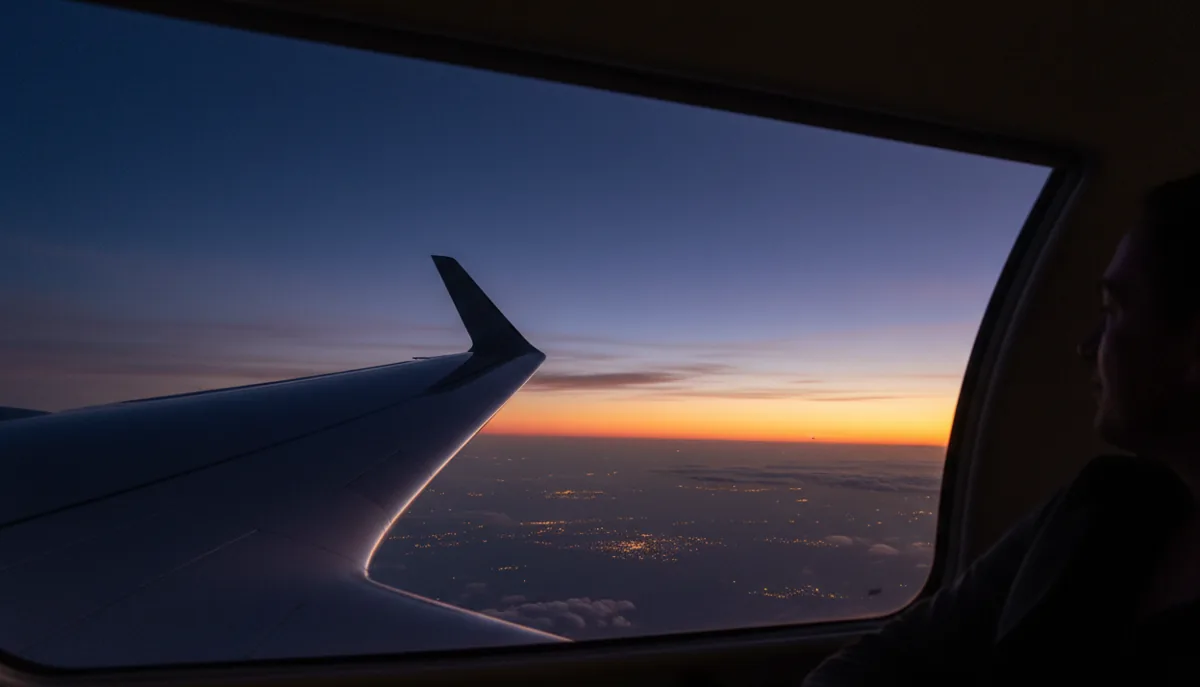
- Above much of the weather. Many storms and much of the turbulence sit lower, so a higher cruise can mean a smoother ride.
- More efficient cruise. Jet engines and wings are designed to cruise efficiently in thin, high air, which is why long flights spend most of their time up high.
- Room to route around traffic. A jet that can climb above the busiest altitudes gives air traffic control more options.
None of this means a higher flight is always better. The right altitude is the one that suits the aircraft, the route and the day's weather, and that call belongs to the flight crew and air traffic control.
Fly Higher, Faster, and Smarter with BLADE
BLADE arranges private flights by helicopter, seaplane, turboprop and jet. The flights are operated by DOT/FAA licensed carriers, and the operator's pilots choose the altitude for each trip within air traffic control's instructions.
In New York, BLADE offers flights between Manhattan and JFK or Newark in about 5 minutes, from $195 per seat. BLADEone, a 16-seat jet service between Westchester and Miami or Palm Beach, returns for November 2026 to May 2027. For other trips, BLADE can arrange a charter on the aircraft that suits your group.
Regulations and Airspace Restrictions
Air Traffic Control and Altitude Assignments
At jet cruising altitudes, the pilot does not simply pick a number and go. The flight is under air traffic control, which assigns altitudes to keep aircraft safely separated. Pilots request the altitude they want, and controllers approve it, assign a different one, or hold the jet lower until traffic clears.
Class A Airspace and Special Air Traffic Rules
In the United States, the airspace from 18,000 feet MSL up to and including flight level 600 is Class A airspace. The FAA's rule is that, unless otherwise authorized, every aircraft in Class A airspace must fly under instrument flight rules (IFR) and stay in two-way radio contact with air traffic control. Every private jet cruising at the altitudes in this guide is therefore flying under IFR, on an altitude cleared by a controller.
Frequently Asked Questions
What altitude do private jets typically fly at?
It depends on the aircraft and the trip. Business jets are certified to between about 41,000 and 51,000 feet, and longer flights usually cruise in the upper part of that range. Short flights often stay lower.
Why do private jets fly at higher altitudes than commercial jets?
They don't always. Many business jets are certified to 45,000 or 51,000 feet, which gives them room to climb above other traffic and weather when the route allows. Whether a given flight does depends on the trip length, the weather and air traffic control.
What are the advantages of flying at higher altitudes?
A higher cruise can mean a smoother ride above much of the weather, more efficient cruising in thin air, and more routing options around traffic.
Do smaller private jets fly at lower altitudes than larger private jets?
Often, yes. Light jets such as the Citation Mustang and Phenom 100EX top out at 41,000 feet, while many large jets are certified to 51,000 feet. Light jets also fly shorter trips, which keeps many of their flights lower.
What is the highest a private jet can fly?
The highest certified business jets in this guide, including the Gulfstream G700, Bombardier Global 6500, Dassault Falcon 8X and Cessna Citation X, are approved to 51,000 feet.
Who decides the cruising altitude?
The operator's flight crew plans and requests an altitude, and air traffic control approves or assigns it. In Class A airspace, from 18,000 feet MSL to flight level 600, every aircraft flies under IFR and follows those clearances.