
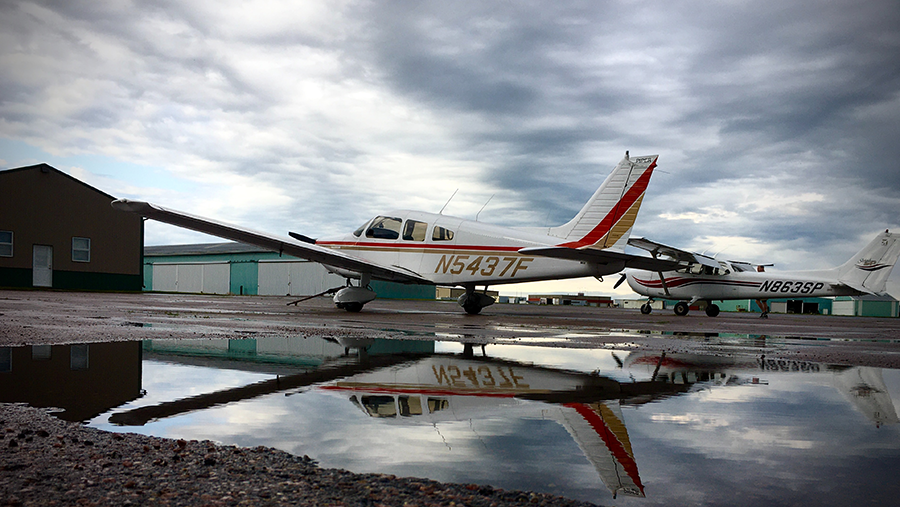
Definition of Fixed Base Operator (FBO)
Fixed Base Operator (FBO) is a business that provides essential aeronautical services such as refueling, maintenance, and hangaring facilities. FBOs play a vital role in fulfilling the needs of general aviation, private and commercial aircraft operations, facilitating safe and efficient air transportation services. They usually operate at airports or airfields, providing services to incoming and outgoing air traffic.
FBOs often offer additional amenities like transportation, catering, and rental cars to enhance the customer’s travel experience. They also handle the required administrative duties and paperwork for their clients.
FBOs tailor their services to each client’s needs. Additionally, they have a high level of security in response to the threat of terrorism and other safety concerns.
The first FBO in the US was established by the Atlantic Refining Company in 1926. It was located at Philadelphia’s Curtis Field and offered a range of services, including fueling, maintenance, and hangers. This paved the way for the development of a significant industry that supports commercial and private aviation to this day. Today FBOs are a key link in the air transportation system.
How Blade uses FBOs for private airport access in New York City
In practice, Fixed Base Operators are the facilities that make modern private aviation possible. Companies like BLADE rely on FBOs to handle passenger arrivals, departures, ground coordination and aircraft services at major airports.

In New York City, BLADE arranges helicopter flights between Manhattan and nearby airports, including JFK and Newark. These flights use FBO facilities rather than commercial terminals, allowing passengers to avoid crowded airport infrastructure while benefiting from streamlined security procedures and dedicated ground handling.
This operational model highlights the role FBOs play in supporting time-sensitive private travel, where efficiency, discretion, and predictability are critical.
Who typically uses Fixed Base Operator services
Fixed Base Operator services are primarily used by private aircraft owners, business jet operators, charter companies, air ambulance providers, and government or military flights. These users require specialized ground handling, privacy, and operational support that commercial terminals are not designed to provide.
FBOs are also used by corporate flight departments managing frequent executive travel, where time efficiency and aircraft readiness are essential. The ability to consolidate fueling, maintenance, hangar access, and passenger services in one location makes FBOs a preferred choice for non-commercial aviation.
Services Provided by a Fixed Base Operator
A Fixed Base Operator (FBO) typically provides fueling, aircraft maintenance, hangar, flight planning and concierge services. Each is covered below.
Fueling services
A Fixed Base Operator (FBO) offers comprehensive fuel-related support services. They offer aviation fuel and jet fuel, sometimes at preferential prices to their clients. They also provide a full range of related services to support fueling operations, such as ground handling, catering, baggage handling, and aircraft de-icing.
In addition, FBOs may have specialized knowledge of specific types of aircraft and their respective fuel requirements. This knowledge allows them to provide excellent advice on the correct type and quantity of fuel required for each flight based on an accurate understanding of the aircraft’s capabilities.
For pilots arriving at an airport with an FBO presence, fueling services are generally straightforward. However, it is always prudent to contact the FBO before arriving at the airport to ensure that all requirements related to refueling are met.
It is advisable to establish a working relationship with an FBO while preparing for long trips since this provides for easier communication before arrival by eliminating any last-minute surprises or misunderstandings that could lead to costly delays or extra expenses.
Most FBOs also maintain the aircraft they serve.
Aircraft maintenance services
As a Fixed Base Operator, one of the services includes ensuring the constant upkeep of aircraft. This means offering Aircraft Maintenance Services such as inspections, repairs, and overhauls. These services maintain compliance with industry regulations, which improves aircraft reliability and reduces downtime.
To keep aircraft in proper working order, FBOs offer scheduled maintenance checks that include specific tasks such as engine oil changes, brake inspections, and tire replacements. They also conduct unscheduled maintenance checks in case of unexpected problems. In addition to regular maintenance checks, FBOs offer emergency repair services for incidents ranging from minor mechanical faults to major structural damage.
FBOs are equipped with state-of-the-art maintenance facilities that can accommodate various types of aircraft. The qualified mechanics who carry out these maintenance activities have undergone rigorous training and possess certifications to address different types of technical issues.
Many FBOs also store aircraft between flights.
Hangar services
The services provided by a Fixed Base Operator (FBO) in the form of aircraft storage, maintenance, and related services are known as Hangar operations. This means storing aircraft in a secure and climate-controlled hangar and also providing fueling services which include refueling, defueling, and fuel quality control.
In addition to these basic Hangar services, some FBOs also offer concierge services such as catering for passengers and crew members, ground transportation arrangements, and luxury lounges. On-site customs clearance is another feature of many FBOs. This service allows international travelers to clear customs without having to go through the hassle of leaving the airport.
Some FBOs even provide flight planning and weather briefing facilities along with on-site FAA-approved maintenance and repair stations. They work hard to ensure that their clients’ planes remain in excellent condition by providing scheduled inspection services.
It is recommended that customers research the range of offerings available from different FBOs before selecting the one they will use. Also, it is essential to have an understanding of what kind of support will be necessary when traveling by air so one can choose a Fixed Base Operator based on these requirements. Choosing an FBO with state-of-the-art facilities and experienced staff can ensure the safe handling of aircraft while maintaining passenger comfort throughout their journey.
FBOs can also help crews plan the flight itself.
Flight planning services
As a vital component of services provided by a Fixed Base Operator, offering assistance in the flight planning process is critical for successful operations. A Fixed Base Operator (FBO) typically assists pilots in determining factors such as fuel quantity requirements, optimal routes and alternate airports that may be used in case of diversions or other contingencies. By leveraging state-of-the-art technology and meteorological data, FBOs help pilots optimize their route plans based on weather patterns, potential airspace restrictions and other emerging aviation-related factors. Efficient flight planning can contribute significantly to enhancing safety standards and maximizing operational efficiency for private jet owners or charter operators.
Apart from this, the FBO also helps with the acquisition of necessary aviation documents and permits that are essential to operate flights smoothly across different regions. They liaise with ground handlers and organize aircraft handling or catering services on behalf of clients at the airport premises. Some FBOs offer additional customized services such as arranging concierge services or discreet VIP security screening facilities to cater to exclusive clientele requirements.
To add value to their vast range of offerings, select FBOs have collaborated with tech companies who provide real-time tracking systems and other advanced technological tools for better situational awareness throughout the flight process cycle.
Operators that cannot manage these tasks in-house often hand them to the FBO.
On the passenger side, FBOs offer concierge services.
Concierge services
Facilitating the passengers with personalized assistance is a distinctive service provided by FBOs. They extend their services beyond the fixed approach and departure procedures and cater to every little detailing of passenger comfort. These services, commonly referred to as Passenger Services, includes arranging transportation, hotel booking, catering, and other ancillary facilities.
FBOs offer 24/7 concierge services staffed by experienced personnel who cater to client requirements throughout the arrival and departure journey. Apart from standard arrangements like limousine bookings or ground transportation for the passengers, this service comprises managing custom clearance or security matters upon arrival. It also provides support in connecting flights and rebooking canceled or delayed reservations on behalf of clients.
FBO’s unique advantage is offering private lounges where clients can relax while managing their travel arrangements. Such personalization techniques are tailored according to client preferences and expectations.
Pro Tip: Availing concierge services at FBO can significantly reduce stress associated with commercial air travel by providing seamless support throughout the journey.
Together, these services let passengers and crews focus on the flight.
Advantages of Using a Fixed Base Operator
Using an FBO brings three main advantages: lower operating costs, better efficiency, and stronger safety and security.
Reduced Operational Costs
One of the top benefits of utilizing a Fixed Base Operator (FBO) is the ability to minimize operational expenses. By partnering with an FBO, businesses can access a range of amenities and services that reduce fuel and maintenance costs significantly. These include discounted fuel prices, aircraft cleaning, regular maintenance and repair services, parking facilities, and concierge services.
In addition to these standard offerings, FBOs may also provide unique cost-saving opportunities that vary depending on location. For instance, some FBOs situated in low-traffic airports may waive certain fees or offer lower handling charges for operators who choose to frequent their facility. Others may offer special incentives designed to keep customers coming back year after year.
It’s important for operators to weigh these types of advantages when considering which FBO to partner with for long-term savings on their operations budget. Reputable FBOs can also help pilots stay up-to-date with the latest information regarding airport procedures and regulations, ensuring a smooth arrival and departure process.
An experienced FBO can help keep operating costs down.
Improved Efficiency
Improved Operational Productivity with Fixed Based Operators (FBOs)
Fixed Base Operators (FBOs) can help airports and aviation companies streamline operations effectively, enhancing productivity and efficiency. FBOs provide strategic management of aircraft, fueling, maintenance, ground handling services, pilot amenities, concierge-level customer service, and other various operational aspects in one place. This centralized approach helps avoid wasting valuable time and resources by providing a single point of contact for all aviation-related functions.
Incorporating FBO services can significantly reduce the waiting time, fuel wastage caused due to inefficient flight planning or routing. FBO packages provide tailored crew accommodation with easy booking options resulting in substantial cost savings for operators. This is highly beneficial in reducing the regulatory risks associated with cross-border aviation maintenance requirements.
Pro Tip: By using an Airport’s designated Fixed Base Operator, airline operators can capitalize on hassle-free parking arrangements and other related solutions while keeping operational delays at a minimum.
Security is another reason operators choose an FBO.
Enhanced Safety and Security Measures
The Fixed Base Operator (FBO) offers an array of services that enhance safety and security measures. FBOs are equipped with comprehensive safety protocols, including fire prevention systems, equipment quality checks, and fuel storage maintenance. They also employ highly trained personnel who perform regular safety inspections and offer emergency response services to prevent accidents and minimize injury risks.
Moreover, FBO facilities are secured by sophisticated security measures such as CCTV surveillance systems, perimeter fencing, electronic door access control, and on-site security personnel trained in handling volatile situations. These measures ensure protection against criminal activities like theft or vandalism, trespassing, and terrorism threats resulting in a safe aviation environment.
FBOs also look after passengers from arrival to departure, with private lounges and quick boarding. That care extends to every guest, whatever their age or needs.
How Fixed Base Operators differ from commercial airport terminals
Unlike commercial airport terminals designed for high passenger volumes, Fixed Base Operators focus on individualized service and aircraft-centric operations. FBOs operate in controlled-access areas of airports, offering private lounges, direct ramp access, and tailored ground services.
Commercial terminals prioritize standardized security screening and airline operations, whereas FBOs emphasize flexibility, privacy, and speed. This distinction makes FBOs especially valuable for private aviation, charter services, and specialized aircraft operations that require customized support.
What Is an FBO in Aviation?
A fixed-base operator (FBO) is a private company authorized to operate at an airport and provide aviation support services to aircraft, crew, and passengers. Unlike commercial airline terminals, FBOs serve general aviation — private jets, charter flights, and business aircraft rather than scheduled commercial routes.
The term "fixed-base" originated after the Air Commerce Act of 1926, whose licensing, maintenance and training requirements curtailed the transient nature of civil aviation. Before this regulation, many aviation services were offered by transient operators with no permanent base. The Act established the framework that defines FBO operations to this day.
Internationally, the term is used in International Civil Aviation Organization (ICAO) publications, but it has not been defined as an international standard.
Notably, while the FAA regulates individual activities that FBOs may offer — such as repair stations (Part 145), flight training, and air taxi or air carrier services — there are no federal regulatory standards that govern all FBO operations comprehensively under a single framework. Fixed-base operator
Federal oversight also protects aircraft owners' rights at FBO-served airports: the FAA's Grant Assurance 22(f), Economic Nondiscrimination, requires that airport sponsors permit aircraft owners and operators to self-service their own aircraft — including maintenance, repair, and self-fueling — using their own employees, even where FBOs operate. FAA Order 5190.6C, Airport Compliance Manual Chapter 11
The simplest way to understand an FBO: think of it as a private terminal where general aviation travelers receive the ground support needed before, during, and after a flight.
Where Did the Term 'Fixed-Base Operator' Come From?
Before the Air Commerce Act of 1926, early aviation in the United States was dominated by barnstormers — itinerant pilots who traveled from town to town offering rides and aerial demonstrations with no permanent base of operations. There was no licensing, no standardized safety oversight, and no fixed location tying operators to a specific airport or airfield.
The Air Commerce Act changed that. The legislation required licensing of pilots, aircraft maintenance requirements and training standards, which curtailed the transient nature of civil aviation. That regulatory requirement is where the term "fixed-base operator" originates — an operator permanently based at one location, rather than moving between them.
That distinction carries real weight. A fixed location meant accountability, inspectable facilities, and consistent service standards. The term has remained unchanged because the underlying regulatory logic still applies.
What Services Does an FBO Offer?
FBO services fall into two clear categories: support for the aircraft and support for the passengers and crew on board.
Aircraft Services
Fixed-base operators provide the ground-level infrastructure that keeps private and commercial aircraft operational between flights:
- Fueling services – Jet-A and AvGas supply for turbine and piston aircraft
- Hangaring – Enclosed storage that protects aircraft from weather and reduces wear
- Tie-down services – Open-air secured parking for shorter stopovers
- Aircraft maintenance – Line maintenance, inspections, and AOG (aircraft on ground) recovery
- Flight instruction – Certified training for student and licensed pilots
- Aircraft rental – Hourly access to single- and multi-engine aircraft for qualified pilots
Passenger Services
On the passenger side, FBOs offer a private terminal experience that bypasses the congestion of commercial airports:
- Private lounges – Dedicated waiting areas away from public terminals
- Concierge services – Ground transport, catering, and hotel coordination
- Expedited customs and immigration – Faster international clearance at approved facilities
- Business facilities – Conference rooms, high-speed Wi-Fi, and printing
- Crew amenities – Rest areas, flight planning stations, and briefing rooms
The time advantage is significant: private jet travelers using an FBO can typically arrive just 15–30 minutes before departure, typically avoiding the long security lines and boarding queues of commercial terminals. Fixed Base Operators: What are FBOs?
Travelers exploring private aviation can also use services like BLADE, which connects passengers to flights that depart directly from FBO facilities.
| Service Category | Examples | Who Benefits |
|---|---|---|
| Fueling | Jet-A, AvGas | Aircraft operators |
| Ground storage | Hangars, tie-downs | Aircraft owners |
| Maintenance | Inspections, AOG support | Operators, owners |
| Flight training | Instruction, rentals | Pilots |
| Passenger facilities | Lounges, concierge | Passengers, crew |
| Border services | Customs clearance | International travelers |
How Do FBOs Differ by Airport and Location?
FBO density across airports varies significantly by location and airport size. Nationally, private aviation provides access to over 5,000 FBOs across the U.S., compared to roughly 500 commercial airports served by airlines — meaning private jets can reach destinations that scheduled airlines simply cannot serve. Fixed Base Operators: What are FBOs? Large commercial airports in major metro areas — New York City, Las Vegas, and South Florida — support multiple competing fixed-base operators, giving private jet travelers a direct choice of provider. Smaller general aviation airports typically serve passengers through a single FBO.

Choosing the right FBO matters for four practical reasons:
- Proximity to your destination affects ground transportation time
- Amenity quality ranges from basic lounges to premium private terminals
- Fuel pricing differences between competing FBOs can meaningfully affect charter costs
- Handling speed influences on-time departure performance
How Do You Find and Choose an FBO?
Finding the right FBO starts with the tools pilots and charter brokers use daily. Apps like FBO One and directories such as AirNav list facilities by airport, fuel pricing, and amenity ratings. Charter brokers coordinate FBO selection on behalf of passengers, matching ground handling capabilities to the aircraft type and itinerary.
For private jet travelers, the choice of FBO directly affects baggage handling speed, ground transport coordination, and lounge experience. Evaluate any FBO on three criteria:
- Fueling speed and fuel pricing transparency
- Customer service reputation verified through pilot forums or direct broker referrals
- Amenities including lounges, hangar availability, and ground transportation partnerships
Ramp fees vary widely by aircraft type: single-engine piston aircraft often pay nothing or up to $25–$35, while multi-engine piston aircraft are typically charged $15–$75. Overnight tie-down parking for a single-engine aircraft generally runs $5–$45 per night, making fee research a critical step before arrival. What Is an FBO? A Guide to Fixed-Base Operators
FAQs about What Fixed Base Operator (Fbo)
What is a Fixed Base Operator (FBO)?
A Fixed Base Operator (FBO) is a service provider that provides ground support and other necessary services to private and corporate aircraft owners and their passengers. These services may include fueling, parking, hangar space, catering, maintenance, and more.
What services does a Fixed Base Operator (FBO) offer?
A Fixed Base Operator (FBO) offers a wide range of services, including but not limited to fueling, hangar space rental, ground handling, ramp services, concierge services, catering, aircraft cleaning, maintenance, and repairs.
How does a Fixed Base Operator (FBO) differ from an airline?
A Fixed Base Operator (FBO) serves private and corporate aircraft owners, while an airline serves scheduled passengers. FBOs provide ground handling, fueling, parking, and other services that aircraft owners need to use their planes. Airlines offer scheduled flights for individual passengers.
How do I choose the best Fixed Base Operator (FBO) for my needs?
It’s important to choose a Fixed Base Operator (FBO) that provides the services you need. Look for an FBO that offers fueling, ground handling, ramp services, concierge services, catering, aircraft cleaning, maintenance, and repairs. Consider the location, pricing, and reputation of the FBO. You may also want to check if they have a loyalty program that offers discounts or benefits.
Do I have to use the services of a Fixed Base Operator (FBO) at an airport?
No, you are not required to use the services of a Fixed Base Operator (FBO) at an airport. However, in many cases, FBOs may be the only option for certain services, such as fueling, ground handling, and aircraft parking. Additionally, some airports may require you to use the services of their designated FBOs.
What is the cost of using a Fixed Base Operator (FBO) service?
The cost of using a Fixed Base Operator (FBO) service can vary depending on the services you require, the location of the airport, and the FBO provider. Most FBOs provide pricing information on their website or through a customer service representative. It’s recommended to compare prices from different FBOs to find the best value for your needs.