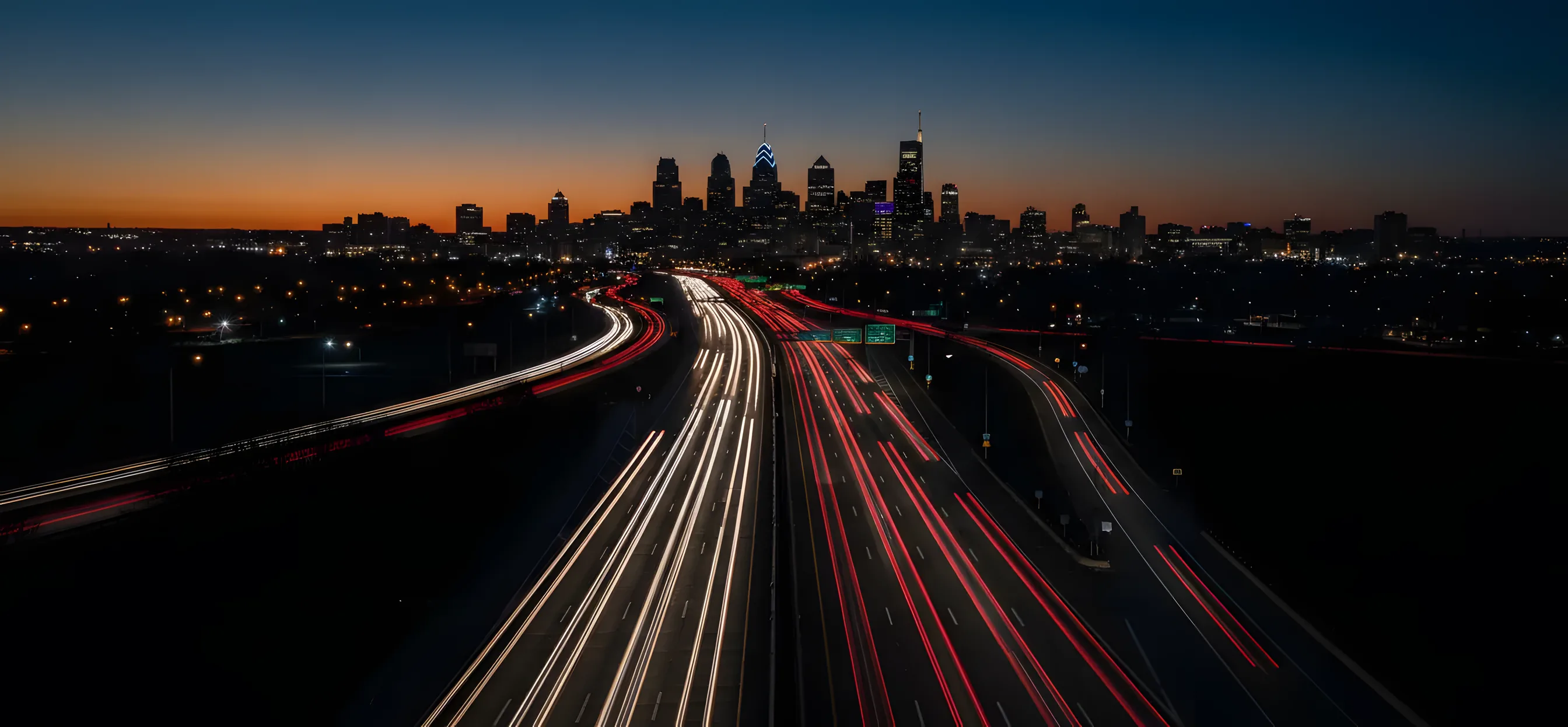
Newark, New Jersey, and Philadelphia sit on the same rail and highway corridor between New York and Washington. Newark Liberty International Airport (EWR) is about 80 miles from Philadelphia International Airport (PHL) in a straight line, and the road and rail routes run somewhat longer. This guide covers the distance and the practical ways to make the trip.
Key Takeaways
- Newark Liberty and Philadelphia International airports are about 80 miles apart in a straight line.
- The train is the most practical way to go. Amtrak's Northeast Regional stops at Newark Liberty International Airport Station, and Acela stops at Newark Penn Station.
- NJ Transit to Trenton, then SEPTA into Philadelphia, is a lower-cost rail route with a published NJ Transit fare.
- Driving goes door to door, but weekday rush hours slow the highways.
- If your trip starts in Manhattan, BLADE offers flights to Newark in about 5 minutes.
Exploring the Distance: Newark, NJ to Philadelphia, PA
In a straight line, Newark Liberty and Philadelphia International airports are about 80 miles apart. By road or rail the distance is longer, since neither follows a straight line.
How long the trip takes depends on how you travel:
| Option | From | Time |
|---|---|---|
| Amtrak Northeast Regional | Newark Liberty International Airport Station | About 70 minutes to North Philadelphia (Port Authority) |
| NJ Transit and SEPTA | Newark Liberty International Airport Station | About 120 minutes to North Philadelphia (Port Authority) |
| Car | Your door | Varies with traffic |
Driving Distance and Directions
The drive from Newark to Philadelphia heads south through central New Jersey. Use a live traffic map to pick the route, since the fastest road changes with conditions and construction. Tolls apply on the main highways.
Bus Routes and Tickets
Intercity bus companies sell tickets between Newark and Philadelphia. Check where each bus boards in Newark, since stops differ by operator, and where it arrives in Philadelphia. Fares and schedules vary, so compare them on the operators' sites or apps before you book.
Train Travel: A Scenic Alternative
Amtrak runs several services on this corridor:
- Northeast Regional. Stops at Newark Liberty International Airport Station and Newark Penn Station, and runs to North Philadelphia and William H. Gray III 30th Street Station. Coach seats have at least 39 inches of legroom, laptop outlets and free Wi-Fi.
- Acela. Amtrak's high-speed service. It stops at Newark Penn Station, not at the airport, and runs to Philadelphia with Business and First Class seating.
- Keystone Service. Frequent daily service between New York City and Harrisburg by way of Philadelphia.
You can also take NJ Transit's Northeast Corridor Line to Trenton Transit Center and change to SEPTA Regional Rail for Philadelphia. From the airport station, the Port Authority lists NJ Transit to Trenton at about 68 minutes and $23.25.
Newark to Philadelphia by Car: What You Need to Know
A car is the most flexible option, especially for a group or a trip with stops. Plan for tolls, and for parking costs in Center City Philadelphia.
Best Time to Drive
Weekday morning and evening rush hours are the slowest times on the highways around both cities. Leave before the morning peak or after the evening peak if you can. Holiday weekends and bad weather add time, so check traffic before you set off.
Must-See Stops Along the Route
If you have time, Trenton, where NJ Transit and SEPTA trains meet, sits along the way and makes an easy break in the drive.
Flying from Newark to Philadelphia: A Quick Hop
The two cities are close enough that a commercial flight between them rarely saves time once you add check-in, security and the trip to and from each airport. For most travelers the train is quicker door to door.
For a group on a tight schedule, BLADE arranges private charters from Manhattan to destinations across the Northeast, including Philadelphia. You choose the aircraft and the time, and BLADE books the flight with a licensed operator. All flights are operated by FAA-licensed carriers.
Airport Transfer Options
- At Newark Airport. The AirTrain runs from every terminal to Newark Liberty International Airport Station, where NJ Transit and Amtrak stop. The ride to the station costs $8.75 unless you hold an NJ Transit or Amtrak ticket, which includes it.
- Starting in Manhattan. BLADE offers flights between Manhattan and Newark in about 5 minutes, from $195 per seat, and a BLADE vehicle takes you between the helicopter and your terminal.
Navigating Public Transportation: From Newark's Bus Stop to Philly's Heart
Bus and Train Stations
In Newark, the two rail stops for Philadelphia are Newark Penn Station, the city's main transit hub with NJ Transit, Amtrak and PATH, and Newark Liberty International Airport Station at the airport. Acela stops only at Newark Penn Station.
In Philadelphia, Amtrak trains stop at North Philadelphia and at William H. Gray III 30th Street Station. From 30th Street, SEPTA Regional Rail and local transit connect to the rest of the city.
Onboard Amenities and Services
On Amtrak, each passenger can bring one personal item and two carry-ons, and checked baggage is available on some trains. Acela and the Northeast Regional both have free Wi-Fi and power outlets.
On SEPTA Regional Rail, pay with a SEPTA Key card or a contactless card. Paying on board costs more. A trip between Philadelphia International Airport and Center City stations costs $8.75 with SEPTA Key or contactless, or $11 on board.
The Cost of Travel: Budgeting Your Trip from Newark to Philadelphia

Bus and Train Ticket Prices
- NJ Transit to Trenton: $23.25 from Newark Liberty International Airport Station, per the Port Authority, plus a SEPTA fare from Trenton into Philadelphia.
- Amtrak: fares vary by train and by when you book. Amtrak offers 10% off for seniors aged 65 and older and for veterans, 15% off for students aged 17 to 24, and up to 60% off for groups with Share Fares.
- Bus: fares vary by operator and date, so compare before you book.
Planning Your Itinerary: Tips for a Smooth Journey
Making the Most of Your Time
Pick the train that matches where you are starting. From the airport, the Northeast Regional is the direct option. From downtown Newark, Newark Penn Station has more Amtrak choices, including Acela. NJ Transit trains run from about 5 a.m. to 1 a.m., not around the clock, so check the last train if you are traveling late.
Avoiding Common Pitfalls
- Check which Newark station. Acela does not stop at the airport.
- Watch for service changes. NJ Transit's My Transit alerts send notices of delays of 15 minutes or more by email, text or app.
- Allow time for the AirTrain. The link to the airport train station is sometimes replaced by shuttle buses during construction of the new AirTrain.
Find airline terminal locations at Newark airport before you travel.
Bottom Line: Distance from Newark to Philadelphia
Newark and Philadelphia are about 80 miles apart in a straight line, measured between their airports. The train is the simplest way to make the trip: the Northeast Regional from the airport, Acela from Newark Penn Station, or NJ Transit and SEPTA for a lower fare. Drive if you need a car at the other end, and avoid rush hour.
FAQs: Distance from Newark to Philadelphia
Does Amtrak go to Newark Airport to Philadelphia?
Yes. Amtrak's Northeast Regional stops at Newark Liberty International Airport Station and runs to Philadelphia. The Port Authority lists the trip to North Philadelphia at about 70 minutes.
How much is train from Newark to Philadelphia?
Amtrak fares vary by train and booking date. On NJ Transit, the fare from the airport station to Trenton is $23.25, plus a SEPTA fare from Trenton to Philadelphia.
How far is Newark from Philadelphia?
About 80 miles in a straight line between Newark Liberty and Philadelphia International airports. The drive is longer.
How can I book a bus ticket from Newark to Philadelphia?
Book on the bus operator's website or app, and check where the bus boards in Newark.
What is the best time to drive from Newark to Philadelphia?
Before the morning rush hour or after the evening rush hour on weekdays, to avoid the heaviest traffic.
Disclaimer: