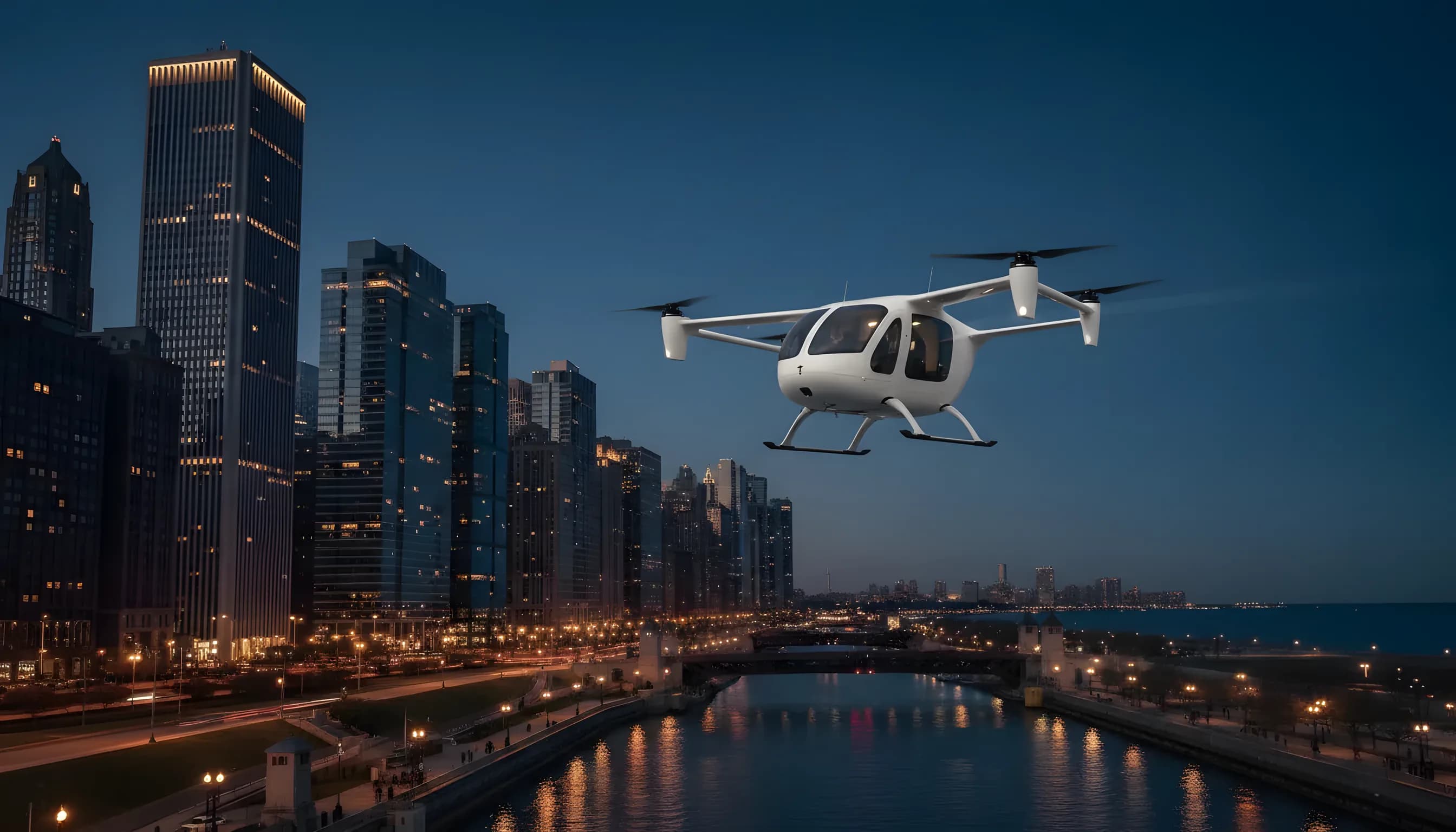
What if your daily commute no longer meant sitting in gridlocked traffic? Personal air taxi services move passengers point to point through the air instead of across congested roads. These aircraft-based systems use electric vertical takeoff and landing (eVTOL) technology to lift off from compact urban pads and deliver riders to their destinations in a fraction of the time. This guide breaks down exactly what personal air vehicle services are, how the technology works, which companies are leading development, and what regulatory frameworks currently govern flight operations. The essentials are below.
What Is a Personal Air Taxi?
A personal air taxi is a small, privately operated aircraft designed to carry one or two passengers on demand — without fixed schedules, shared cabins, or commercial airline infrastructure. Unlike commercial air taxis, which operate on booked routes with multiple passengers, a personal air taxi serves a single traveler or pair for a specific, point-to-point journey.

The two primary technology categories driving this space are eVTOL (electric vertical takeoff and landing) aircraft and broader personal air vehicles — both engineered to take off and land without a runway.
Personal air taxis differ from traditional helicopters in three key ways:
- Electric or hybrid-electric propulsion replaces conventional turbine or piston engines
- Autonomous or semi-autonomous flight systems reduce or eliminate the need for a licensed pilot
- Compact airframes are designed for urban and suburban environments, not long-range commercial travel
The broader air transfer market that personal air taxis are disrupting is already substantial: the global helicopter airport transfer market was valued at $1.2 billion in 2025 and is forecast to reach $1.9 billion by 2034, growing at a CAGR of 5.8%. Helicopter Airport Transfer Market Research Report 2034
For travelers already familiar with time-sensitive NYC helicopter airport transfers, personal air taxis represent the next evolution — smaller, potentially lower-cost, and built for individual on-demand use rather than shared scheduled service. Passengers exploring NYC airport transportation options — from helicopter transfers to ground connections — can see how this emerging category fits alongside existing services.
How Do Personal Air Taxis Work?
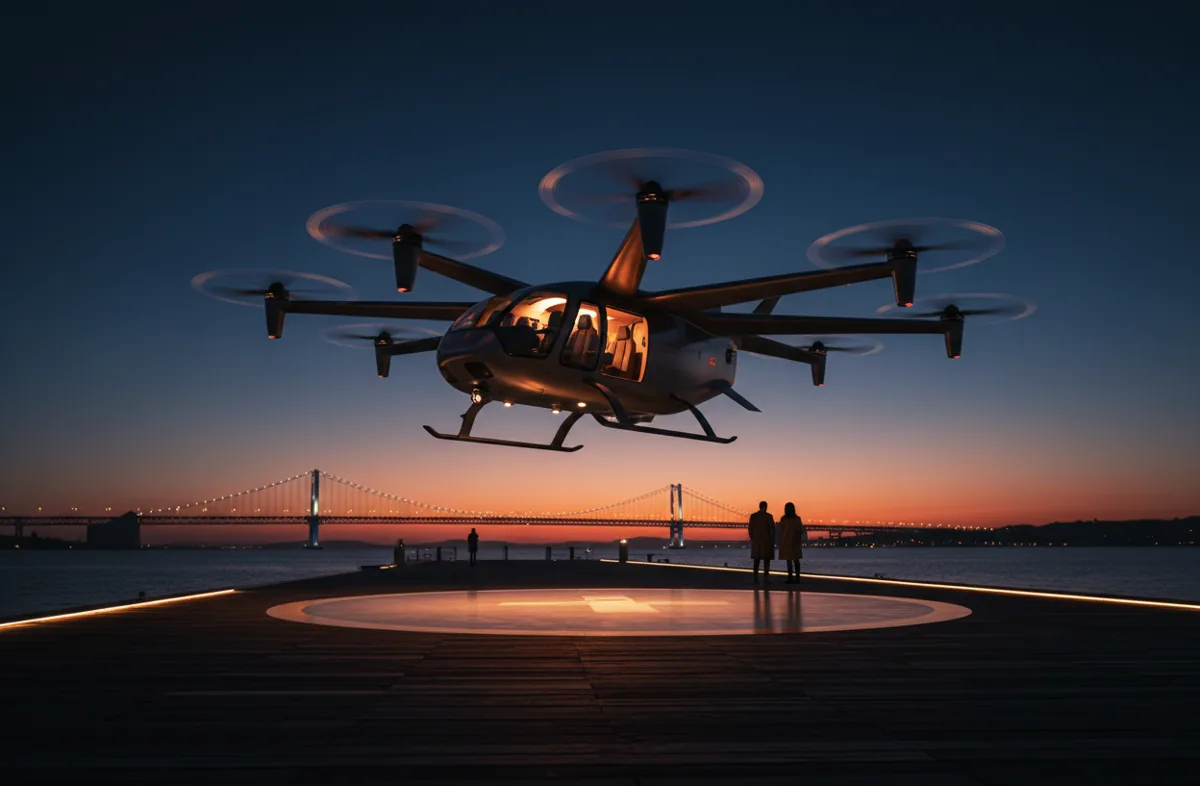
Personal air taxis operate on electric vertical takeoff and landing (eVTOL) technology, eliminating the need for a runway entirely. Battery-electric motors power multiple rotors simultaneously, lifting the aircraft straight up from compact surfaces like rooftops, parking lots, or private driveways.
Electric Vertical Takeoff and Landing (eVTOL) Explained
An eVTOL aircraft replaces the combustion engine with a distributed electric propulsion system — multiple motors driving independent rotors across the airframe. This design reduces single points of mechanical failure and cuts noise compared to traditional helicopters. Charging works through a home-installed adapter or public EV DC fast-charge stations using a standard CCS plug. A full 0–100% charge completes in approximately one hour; a 20–80% charge takes roughly 30 minutes. That 30-minute window matters: a pilot can top up during a brief stop rather than planning the whole journey around fuel availability.
Fly-By-Intent and Autonomous Flight Controls
Fly-By-Intent technology translates a pilot's high-level commands — "climb," "hover," "land here" — into precise rotor adjustments handled automatically by onboard computers. The pilot sets the intention; the aircraft manages the execution. This approach reduces the workload required to fly safely, which is one reason personal air vehicles are being designed for operators with far less training than a traditional fixed-wing or rotary-wing certificate demands. Semi-autonomous systems handle stability, obstacle awareness, and emergency response protocols without manual input. Certification requirements are still under FAA review, though personal ultralight-category aircraft operating under FAA Part 103 rules require no pilot certificate at all. Travelers curious about how existing helicopter taxi NYC services operate today can use that context as a baseline for understanding where autonomous personal air taxis are headed.