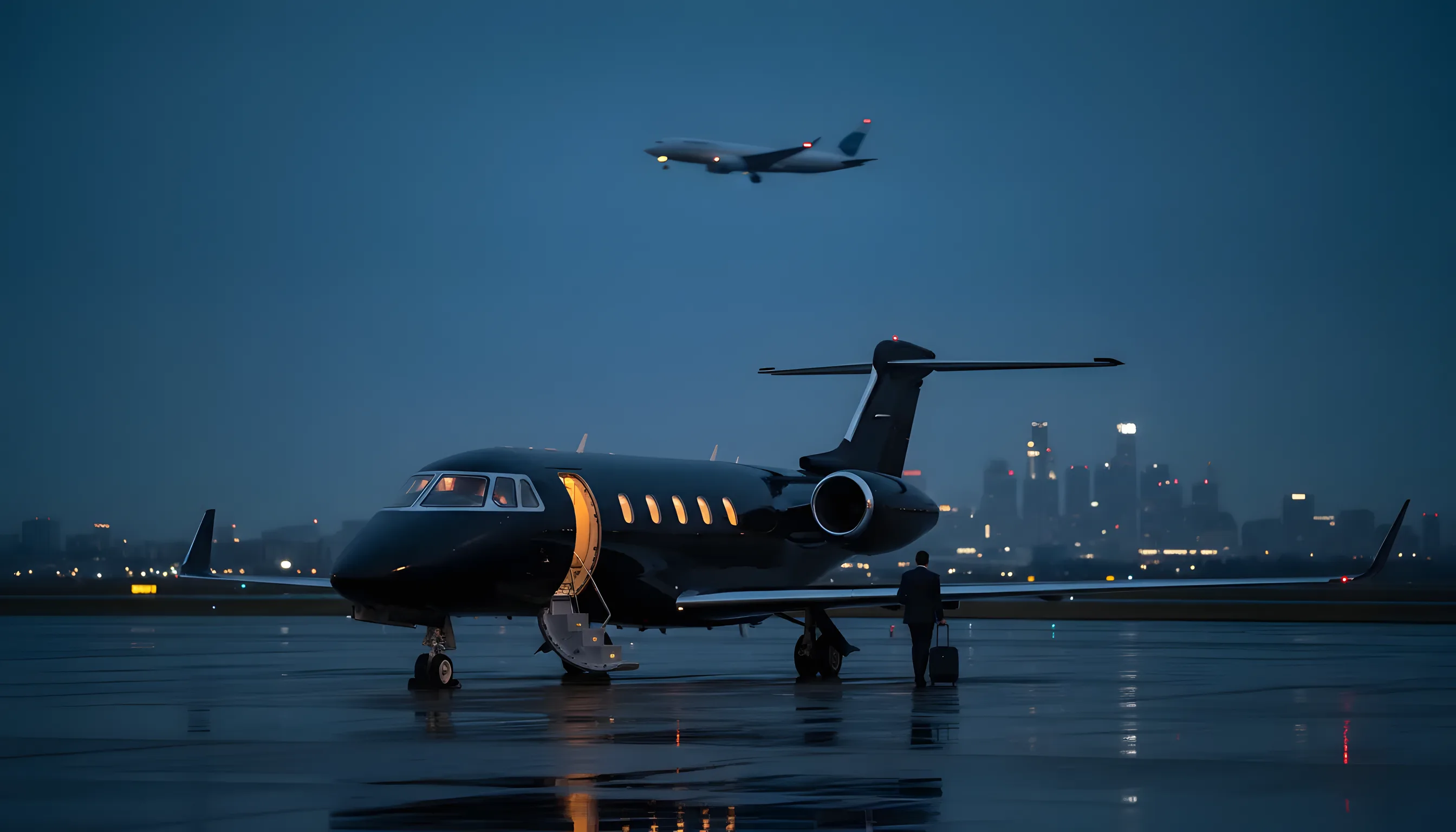
Every minute in a terminal costs money, and for executives moving between New York and key business markets, that cost adds up fast. This article compares private air taxi vs. commercial and the faster airport options available. NYC helicopter airport transfers represent just one layer of a broader private aviation ecosystem that now offers genuine competition to commercial carriers on speed, flexibility, and total door-to-door efficiency. Commercial airlines operate on fixed schedules built around volume, not your timeline. Private air taxi services — from turboprops to super-midsize jets — depart on your schedule, access smaller airports closer to your destination, and eliminate the friction of security lines and connection risks. Below are the aircraft, the price ranges and the ways to book, so you can choose before your next flight.
What Is a Private Air Taxi — and How Does It Differ from Commercial?
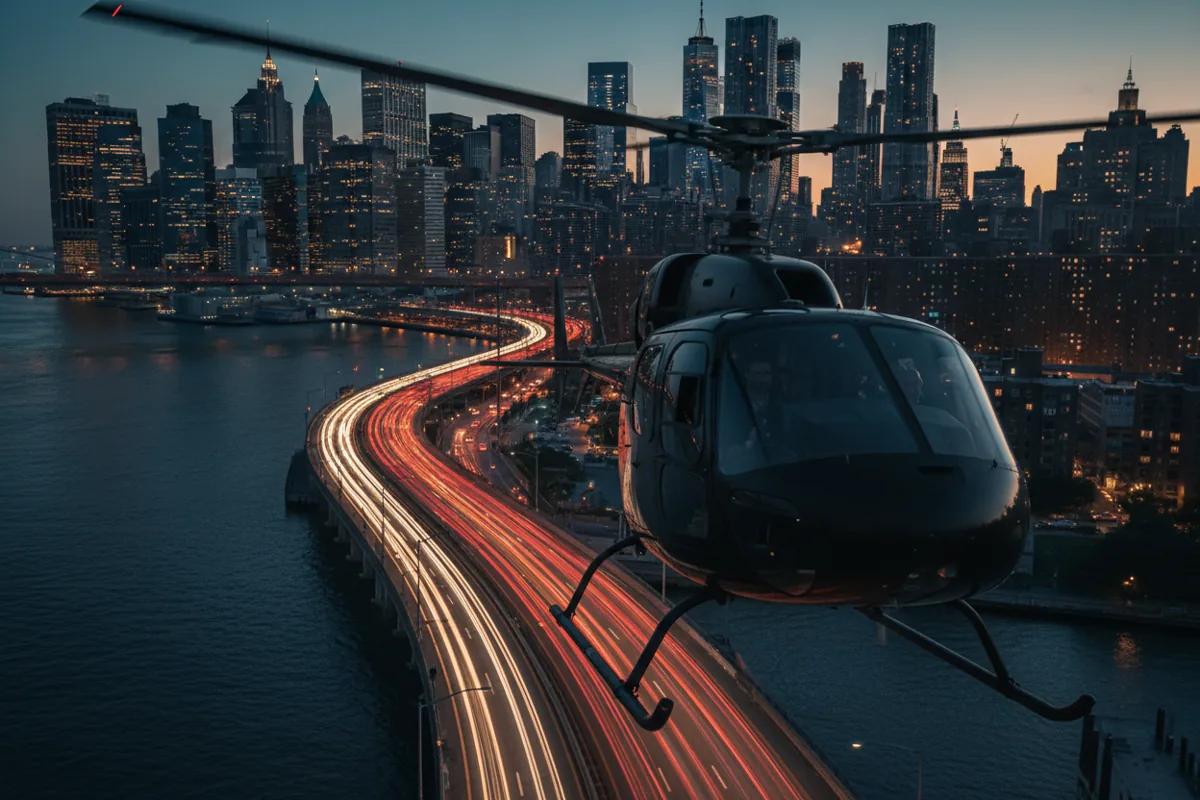
A private air taxi is an on-demand aviation service that moves passengers outside the fixed schedules of commercial airlines. Unlike booking a seat on a departing flight at a set time, private air taxi users choose departure windows, access smaller regional airports, and pay based on the aircraft or — in shared models — per seat. NYC helicopter airport transfers represent one of the most visible real-world applications of this model, compressing what can be a 90-minute ground transfer into a 5-minute flight between Manhattan and JFK.
For the full door-to-door picture, including ground and air segments, see luxury airport transfer: high-end transportation to NYC airports.
Private Jet Taxi vs. Scheduled Airline: Key Distinctions
Commercial aviation runs on published timetables, fixed routes, and shared cabins. Private air taxi flips each of those constraints:
- Schedule: Departure times are set by the passenger, not the carrier.
- Airport access: Private flights use thousands of general aviation airports unavailable to commercial jets — including smaller regional fields with shorter runways.
- Pricing model: Commercial tickets are priced per seat; most private jet charters price the entire aircraft, though shared-seat programs (like helicopter shuttles) offer per-seat alternatives.
- Security and boarding: Private terminals — called FBOs — largely avoid TSA queues and gate holdups, cutting check-in time to as little as 15 minutes.
- Routing: Point-to-point routing avoids hub connections entirely.
Types of Private Air Taxi Services Available Today
The private air taxi category covers three distinct service models:
- On-demand charter: A business or individual books an entire aircraft for a specific trip — ranging from a light jet for short hops to a large-cabin jet for intercontinental operations.
- Shared helicopter seats: BLADE offers individual seats on scheduled or on-demand helicopter routes, at a fraction of whole-aircraft pricing.
- Dedicated jet programs: Fractional ownership and jet card memberships provide committed aircraft access without full ownership costs, favored by frequent business flyers who fly several times a month.
How Much Faster Is a Private Air Taxi Than Commercial?
Private air taxi options compress travel time in two distinct ways: eliminating ground congestion and cruising faster at altitude. The table below captures the door-to-door difference across three transport types using New York City as the benchmark.
| Transport Type | Typical Door-to-Door Time (NYC Example) | Key Time Advantage |
|---|---|---|
| Helicopter air taxi (Manhattan → JFK) | ~5 minutes flight time | Bypasses all road traffic entirely |
| Super-midsize private jet (NYC → Miami) | ~3 hours total | Typically no TSA lines; departs on your schedule |
| Commercial narrowbody (NYC → Miami) | ~5–6 hours total | None vs. private options |
Door-to-Door Time Savings: Helicopter vs. Commercial Ground Transfer
A helicopter air taxi from Manhattan to JFK takes roughly 5 minutes in the air. The equivalent ground transfer by car averages 45–75 minutes under normal traffic conditions — and exceeds two hours during peak congestion. That gap is working time you get back, not just comfort.
BLADE's NYC helicopter airport transfer service uses dedicated terminals, with check-in of about 15 minutes. Commercial passengers at JFK routinely arrive 90 minutes before departure to clear TSA screening and reach their gate. The total time differential between the two approaches often exceeds two hours before the flight even departs. For how these savings add up across a full trip, see executive travel time savings.
Gulfstream Aircraft Speed vs. Commercial Airliners
Gulfstream Aerospace engineers its business jets for high Mach cruise performance. The G280 and G300-class aircraft cruise at up to Mach 0.85, while the long-range G550 reaches Mach 0.885. Commercial narrowbodies — the Boeing 737 and Airbus A320 families — cruise at Mach 0.78 to Mach 0.82.
That speed differential compounds over distance. On a transcontinental flight, a Gulfstream jet arrives 30–45 minutes ahead of a comparable commercial aircraft flying the same city pair — before accounting for boarding delays, taxi queues, or missed connections.
Fly-by-wire flight controls on current Gulfstream models also enable more direct routing. For deeper data on private jet cruise performance, see how fast are private jets compared to commercial airlines.
Which Gulfstream Aircraft Models Are Used in Air Taxi Charter?
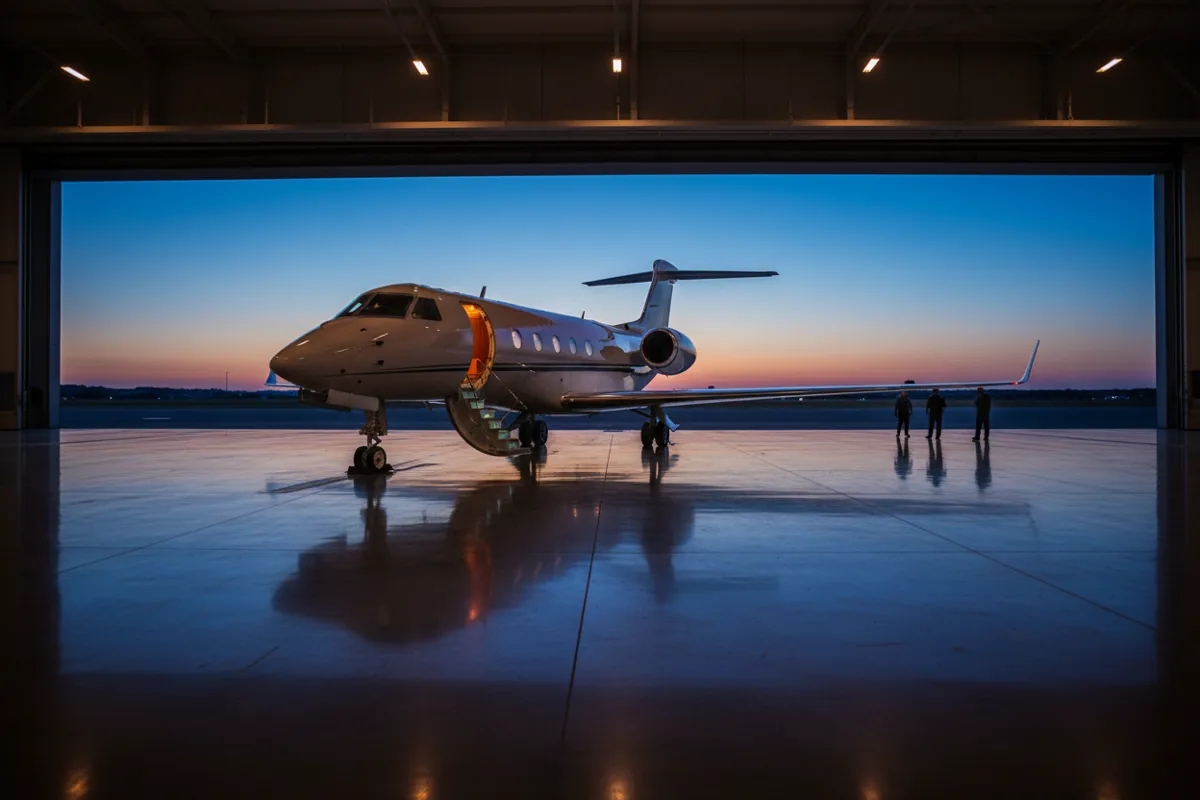
Gulfstream Aerospace, a General Dynamics company tracing its lineage to Grumman Aircraft Engineering Co. and later American Jet Industries, Chrysler, and Forstmann Little & Co., manufactures its aircraft at its Savannah, Georgia headquarters. The evolution from Gulfstream I through IV established the engineering foundation that today's air taxi charter fleet inherits. Fractional programs like NetJets give business travelers structured access to these platforms without full ownership.
Super-Midsize Class: G280, G300, G400
The G280 delivers short-field agility, operating from runways too constrained for larger jets — a practical advantage for regional private jet taxi routes. The G300 and G400 occupy the super-midsize flight category, offering stand-up cabins, ranges exceeding 3,400 nautical miles, and seating for up to 12 passengers. These models balance cabin comfort with flexibility, which suits transcontinental business routes.
Long-Range Options: G500, G550, G650ER
The G550 extends range to approximately 6,750 nautical miles, enabling true trans-Atlantic range on a single fuel stop or nonstop depending on routing. The G650ER pushes intercontinental operations further, carrying up to 19 passengers at Mach 0.925 with NBAA IFR reserves maintained. Both models feature Enhanced Vision Systems, and the G650ER adds fly-by-wire flight controls. The G500 and G600 bridge the gap between super-midsize efficiency and G650-class performance. Operators seeking Private Jet Empty Legs & Cost Savings on these long-range platforms can access repositioning flights at significantly reduced rates.
What Does a Private Air Taxi Cost vs. a Commercial Ticket?
| Option | Estimated Cost (NYC Example) | Passengers | Key Benefit |
|---|---|---|---|
| Shared helicopter seat (BLADE) | $195+/seat | 1 | Lowest entry point; per-seat transparency |
| Light jet charter (hourly) | $3,500–$5,500/hr | 4–6 | Door-to-door speed, no security lines |
| Midsize jet charter (hourly) | $5,500–$8,500/hr | 6–8 | More cabin space, longer range |
| Gulfstream charter (super-midsize+) | $10,000–$15,000+/hr | 8–19 | Intercontinental range, premium service |
| Empty leg deal | 25–75% below standard rate | Varies | Lowest-cost access to private aircraft |
Shared helicopter seats through BLADE start from $195 per seat for NYC airport runs, the most accessible entry into private aviation. A structural inefficiency in private aviation works in travelers' favor: nearly 40% of all private jets fly empty on repositioning legs, creating a steady supply of discounted flights that operators actively monetize rather than absorb as losses. Empty Leg Flight Statistics: Availability, Savings & Booking Trends
For cost-conscious private flyers, empty leg pricing unlocks significant savings: a New York to Miami empty leg averages approximately $7,000, compared to $15,000+ for a conventional charter on the same route — a discount of 50–75% off standard rates. Travelers on the NYC–Miami corridor have outsized access to these flights: New York to Miami is the single busiest empty leg corridor in North America, with 60% of East Coast empty legs running southbound toward Florida during winter months.
The empty leg market itself is growing rapidly — valued at $1.2 billion in 2024, it is projected to reach $3.7 billion by 2033, growing at a CAGR of 13.2%, driven by digital booking platforms and rising demand among corporate travelers. Empty Leg Flight Market Research Report 2033 Savvy travelers can explore empty leg charter deals to understand how to identify and book these discounted repositioning flights before they disappear. Empty leg flights and pre-owned jet access through fractional programs like NetJets reduce Gulfstream charter costs significantly; explore empty leg flight websites to identify current open-charter deals.
How Do You Book a Private Air Taxi or Charter Flight?
The BLADE app makes booking straightforward: download it, select a route, such as NYC, San Francisco, Connecticut, or the Hamptons, and confirm a seat or full aircraft. Charter brokers, fractional ownership programs, and jet cards give frequent flyers structured access to on-demand aircraft for hire across every market.
Is Private Air Travel More Sustainable Than Commercial?
Private aviation's environmental footprint is a legitimate concern, not a talking point to dismiss. Modern Gulfstream aircraft — particularly the G600 and G650 class — can fly on Sustainable Aviation Fuel (SAF) blends and use fuel-efficient fly-by-wire flight controls that reduce unnecessary thrust. Shared-seat models, like helicopter transfers through BLADE, spread emissions across several riders and narrow the gap with commercial aviation. A full 150-seat narrowbody jet produces roughly 90g of CO₂ per passenger kilometer — but a private aircraft flying with one passenger produces multiples of that figure. Flying shared closes much of that difference. The aviation industry acknowledges no perfect solution exists yet, but seat-sharing and SAF adoption represent measurable progress in reducing the environment's exposure to general aviation carbon output.
Who Should Choose Private Air Taxi Over Commercial?
Private air taxi suits a specific traveler profile. Business executives managing intercontinental operations across tight schedules gain the clearest advantage — eliminating layovers, most security queues, and fixed departure windows. Urban commuters relying on NYC helicopter airport transfers benefit from aerial transport that cuts ground transit entirely. Corporate aviation decision-makers evaluating consistent fleet private jet charter management programs find private access essential for predictable scheduling. Helicopter airlines and on-demand aerial transport represent emerging categories that serve this same time-sensitive demand at lower price points. If you are interested in the industry side, see BLADE careers.