
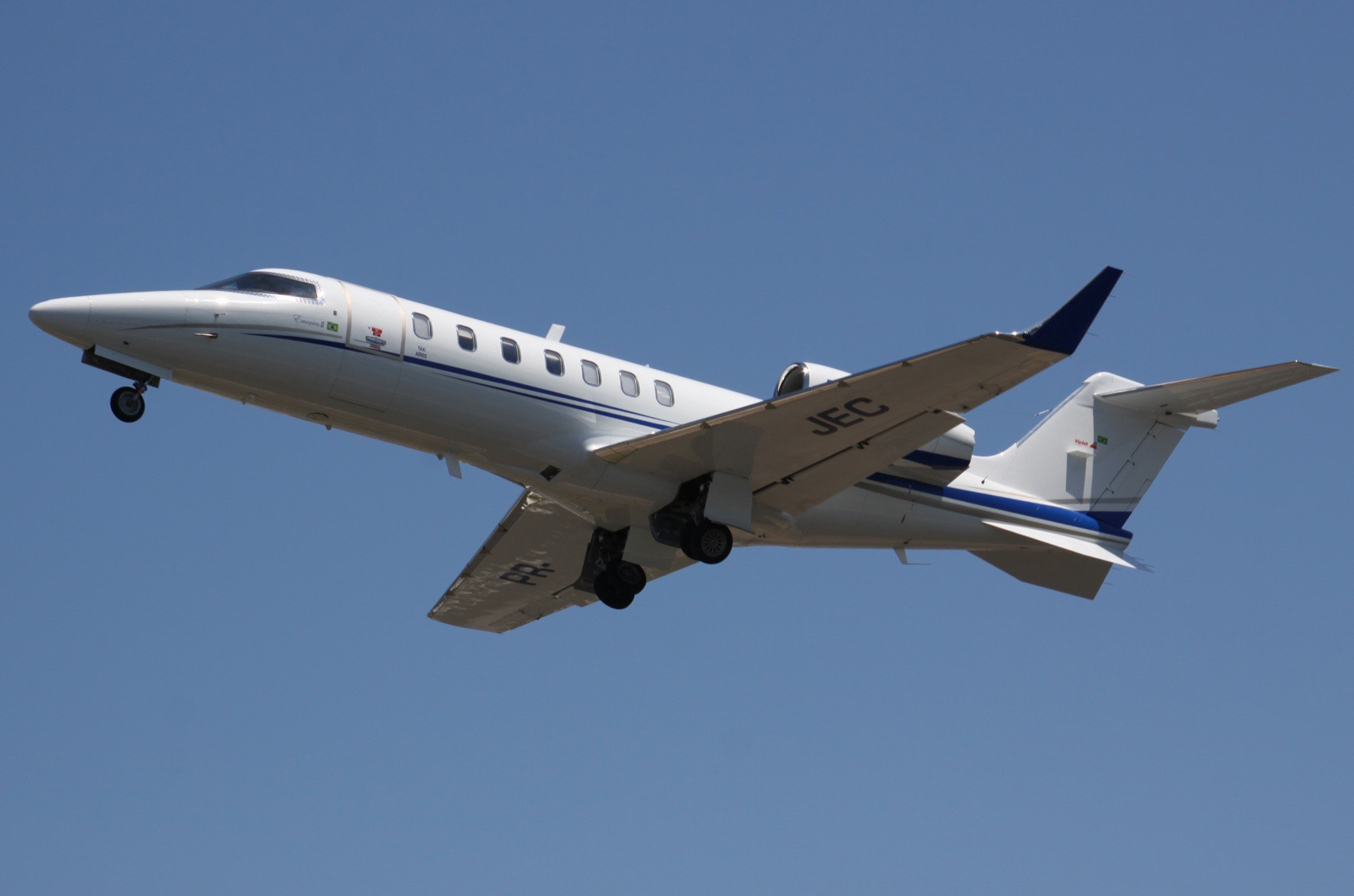
What is the Learjet 40 XR Jet?
The Learjet 40XR is a light business jet built by Bombardier Aerospace, which bought Learjet in 1990. It is a shorter version of the Learjet 45, with the same upgrade that turned the Learjet 45 into the 45XR.
The Learjet 40 took the place of the discontinued Learjet 31A in the Learjet lineup. The prototype, a rebuilt Model 45, first flew on August 31, 2002, from Wichita Mid-Continent Airport. The Learjet 40 entered service in January 2004. Bombardier introduced the 40XR in October 2004, and 133 Learjet 40s were built between 2002 and 2013.
Key Features of the Learjet 40 XR Jet
- Learjet 45 heritage. It shares the Learjet 45's design, with a fuselage 24.5 inches shorter and otherwise comparable performance.
- XR engine upgrade. Honeywell TFE731-20BR engines give higher takeoff weights, faster cruise speeds and faster climbs than the original Learjet 40.
- High ceiling. A maximum operating altitude of 51,000 feet.
- Honeywell avionics. A Primus 1000 four-screen EFIS flight deck.
Body and Engine Design
The original Learjet 40 uses two Honeywell TFE731-20AR turbofans, each rated at 3,500 pounds of thrust. The 40XR moves to the TFE731-20BR configuration, known as the "BR" engines. Owners of the original Learjet 40 can upgrade to the XR standard through a set of service bulletins.
Exterior dimensions from Bombardier's brochure:
- Length: 55.5 ft (16.92 m)
- Wingspan: 47.78 ft (14.56 m)
- Height: 14.13 ft (4.31 m)
Cabin and Interior Design
The Learjet 40 has less passenger room than the Learjet 45, because the fuselage is shorter. Bombardier's typical configuration seats six passengers. Some published figures list capacity as seven.

It is a light-jet cabin, so plan for seated travel and pack with the baggage space in mind. Bombardier notes that floor plans are typical and actual layouts vary, so ask the operator for the floor plan of the jet you are booking.
Speed and Range
Bombardier's figures for an in-service Learjet 40XR:
- Maximum cruise speed: Mach 0.81 (464 knots, 534 mph)
- Maximum altitude: 51,000 feet
- Maximum range: 1,803 nautical miles with 4 passengers and 2 crew
That range assumes standard conditions and IFR reserves. Passengers, bags, weather and winds change what the jet can fly nonstop. For longer trips, ask the operator to confirm the route with your actual load.
Fuel Efficiency
Fuel burn depends on the load, altitude, speed and route. A light jet like the 40XR burns much less fuel per hour than a large-cabin jet, which is part of why it suits shorter trips with a small group. Ask the operator for a trip estimate rather than relying on a published average.
Convenience and Efficiency
The 40XR fits short and medium trips with a small group: a business day trip, a weekend away, or a flight between two cities a few hours apart. It cruises at up to Mach 0.81 and climbs as high as 51,000 feet.

Safety and Comfort
The Learjet 40 shares its basic design with the Learjet 45, which was certified under FAR Part 25, the stricter transport-category rules also used for airliners. The 40XR brochure lists equipment such as a Honeywell EGPWS terrain warning system and RVSM capability.
Safety on any charter also depends on the operator, its crews and its maintenance. BLADE books flights with licensed operators only.
Chartering a Learjet 40XR with BLADE
BLADE arranges private jet charters. All US flights are operated by FAA-licensed carriers, and BLADE books the aircraft for you. Tell BLADE your route, date and group size, and compare the light jets available for your trip. Prices and availability depend on the route, the date and the aircraft.
FAQs about What Is An Learjet 40 Xr Jet?
What is a Learjet 40 XR jet?
The Learjet 40XR is a light business jet from Bombardier Aerospace. It is an upgraded Learjet 40 with TFE731-20BR engines, higher takeoff weights and faster cruise and climb.
What are other models of Learjet jets?
The Learjet 40 comes from the Learjet 45 family, which also includes the Learjet 45 and 45XR. The later Learjet 70/75 was developed from the same design, with newer engines, Garmin avionics and more efficient winglets. Earlier models include the Learjet 23, 31 and 60.