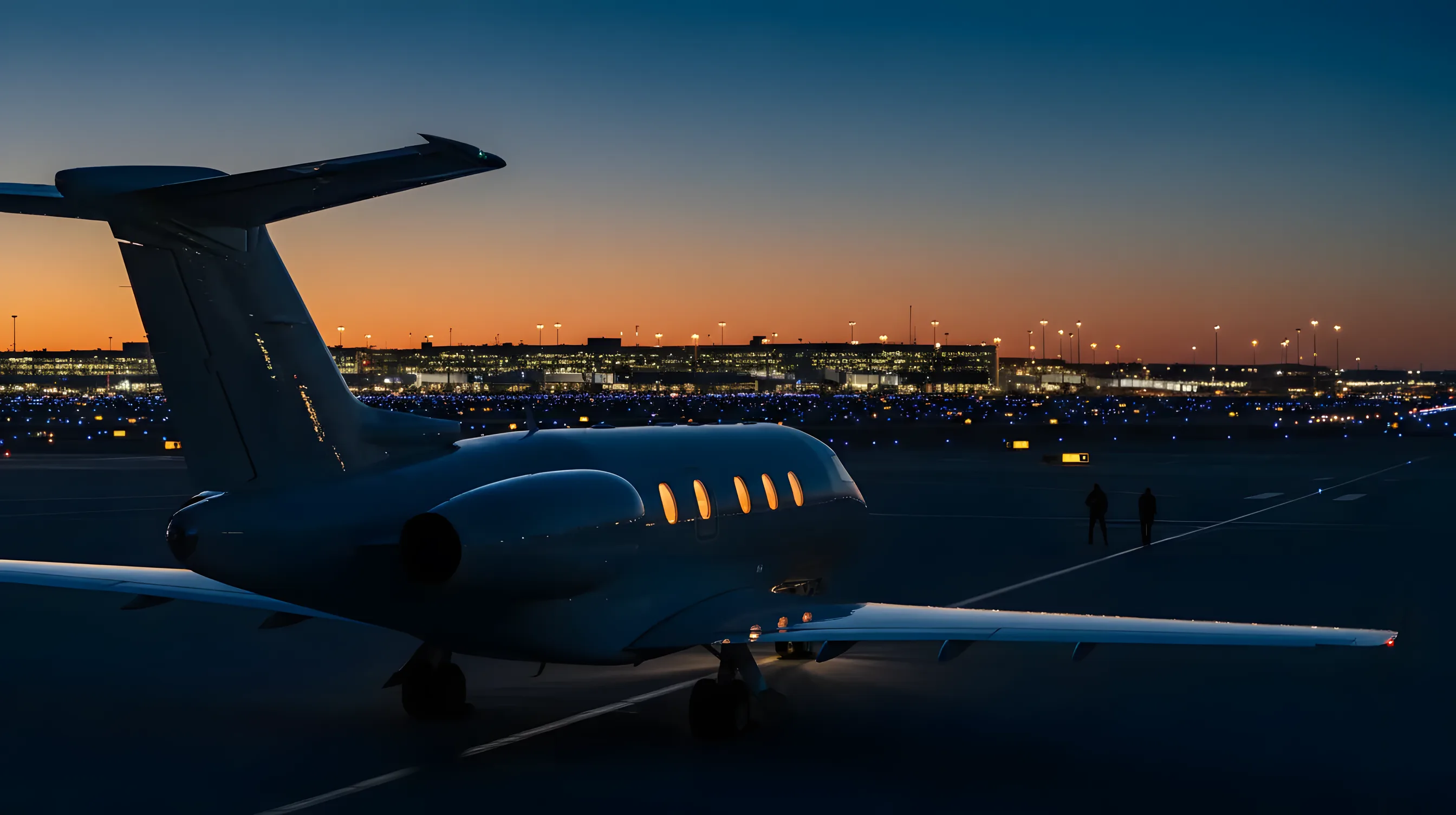

Brief History of Learjet brand
Bill Lear founded the company in the late 1950s as Swiss American Aviation Corporation, in Switzerland. It moved to Wichita, Kansas and became Lear Jet Corporation. The first model, the Learjet 23, flew on October 7, 1963.
Gates Rubber Company bought Bill Lear's stake of about 60% on April 10, 1967, and the company became Gates Learjet Corporation in 1969. Bombardier bought Learjet in 1990 and sold its aircraft as the Bombardier Learjet family.
On February 11, 2021, Bombardier announced the end of all Learjet production. The final aircraft, a Learjet 75, was built in January 2022 and delivered on March 28, 2022.
Learjet 70/75 Jets Overview
The Learjet 70 and 75 are updated versions of the Learjet 40 and 45. Bombardier refreshed the older designs with touchscreen Garmin G5000 avionics, a modern interior, canted winglets taken from the Global 7500/8000 design and Honeywell TFE731-40BR engines.
Lower drag and 200 pounds less weight in the nose section added about 4% more range. The Learjet 75 received its FAA type certificate on November 14, 2013.
The two models share the same cabin cross section. The Learjet 70 is the shorter version, with seven seats. The Learjet 75 is the longer one, with nine seats in a double-club layout.
Specifications and Performance Data
Figures from Bombardier's 2015 fact sheets:
| Learjet 70 | Learjet 75 | |
|---|---|---|
| Passengers (standard) | 7 | 9 |
| Maximum range | 2,060 NM | 2,040 NM |
| High-speed cruise | Mach 0.81 (464 kt) | Mach 0.81 (464 kt) |
| Long-range cruise | Mach 0.75 (430 kt) | Mach 0.75 (430 kt) |
| Maximum operating altitude | 51,000 ft | 51,000 ft |
| Initial cruise altitude (MTOW) | 45,000 ft | 45,000 ft |
| Takeoff distance (SL, ISA, MTOW) | 4,440 ft | 4,440 ft |
| Maximum takeoff weight | 21,500 lb | 21,500 lb |
| Cabin length | 17 ft 8 in | 19 ft 10 in |
| Cabin width | 5 ft 1 in | 5 ft 1 in |
| Cabin height | 4 ft 11 in | 4 ft 11 in |
Range figures assume NBAA IFR reserves, standard conditions, four passengers and two crew. Speed, weather and equipment all change actual range.
Passenger and Cockpit Features
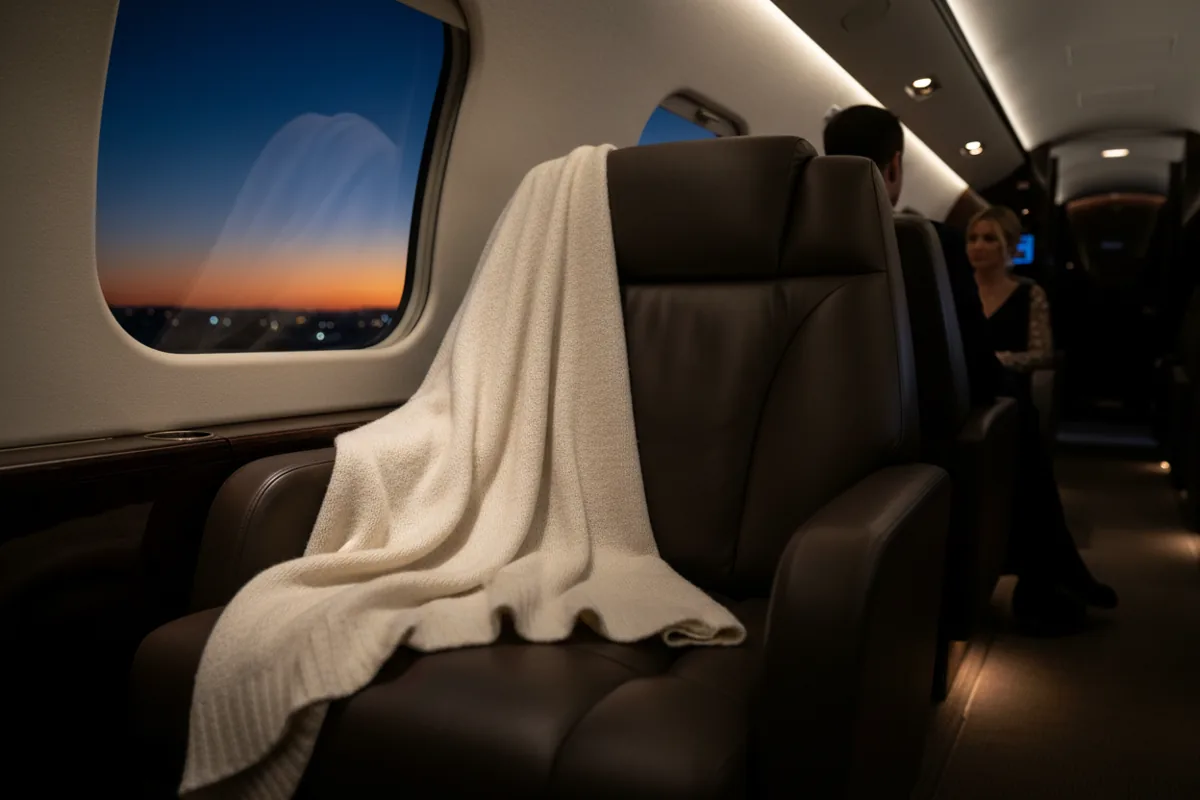
The cabin has a flat floor. A forward galley faces the entry door and is separated from the seating area by a pocket door. The aft lavatory has a belted seat. A Lufthansa Technik cabin management system controls the cabin, and the fact sheets list a forward 12.1-inch HD bulkhead monitor.
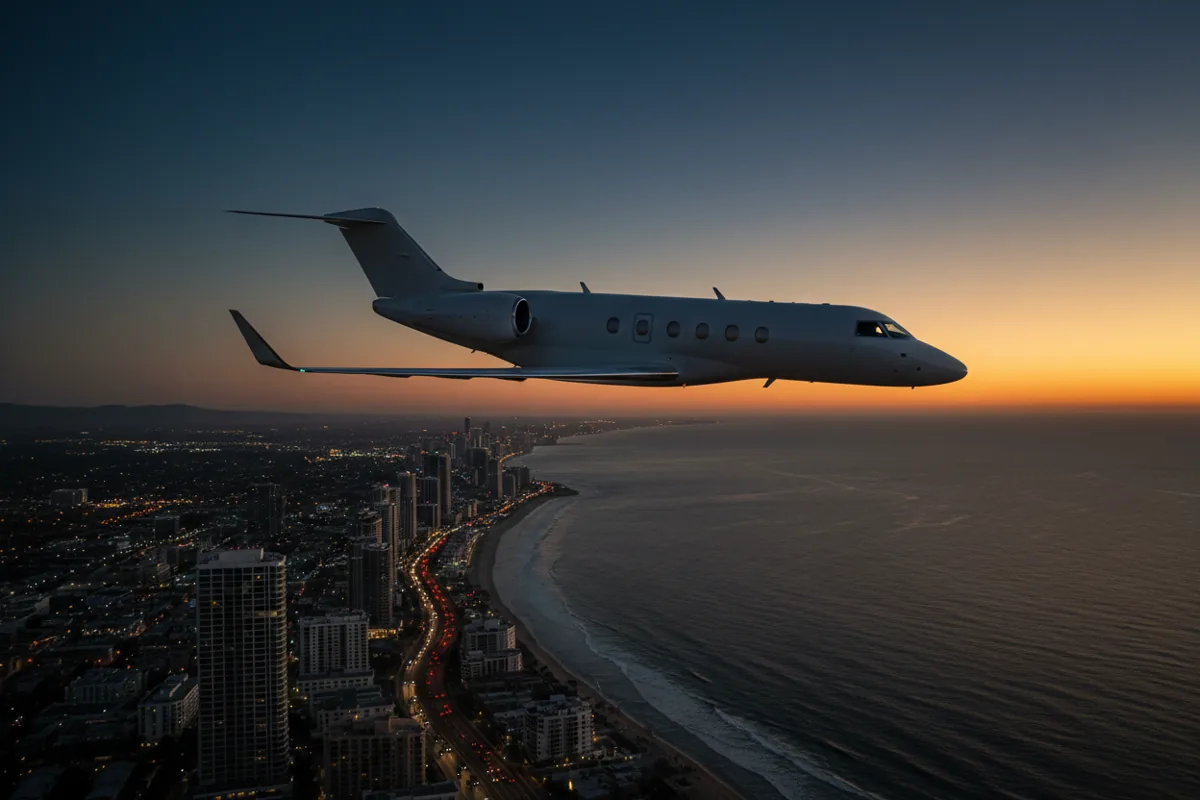
The 50 cubic foot external baggage hold is heated but not pressurized. At the 51,000-foot ceiling, the cabin altitude is 8,000 feet.
Design and Construction
Both models fly on two Honeywell TFE731-40BR turbofans of 3,850 pounds of thrust each, with thrust reversers. The canted winglets came from Bombardier's larger Global jets. The Learjet 75 is certified under FAR Part 25.
Avionics Equipment and Features
Bombardier markets the flight deck as the Bombardier Vision flight deck. It is built on the Garmin G5000, with three high-resolution 14-inch displays, a synthetic vision system, dual flight management systems and graphical flight planning.
Cost and Maintenance
In 2015, the unit cost of a new Learjet 70 was $11.3 million and a new Learjet 75 was $13.8 million. By 2016, Learjet 70 production had been paused for lack of orders, while the 75 stayed in production.
In June 2019, Bombardier launched the Learjet 75 Liberty, priced under $10 million. It has six seats instead of eight, no standard APU or lavatory sink, a maximum payload of 2,910 pounds and a range of 2,080 nautical miles.
By January 2019, Bombardier had delivered nearly 130 Learjet 70s and 75s. Since production has ended, buyers now choose from the pre-owned market, where price depends on year, hours, maintenance status and equipment.
Operational Costs and Fuel Efficiency
At 41,000 feet and Mach 0.78, the Learjet 70/75 burns about 1,000 pounds of fuel per hour. At Mach 0.80, that rises to about 1,400 pounds per hour.
Conclusion: Is a Learjet 70/75 Jet Right for You?
The Learjet 70/75 suits small groups who want speed and a high cruising altitude on trips of up to about 2,000 nautical miles. Choose the 75 if you need the longer nine-seat cabin, or the 70 if seven seats are enough. The cabin is 4 ft 11 in high, so it is not a stand-up cabin. If headroom matters more than speed, compare it with a larger midsize jet.
Chartering a Learjet 75 with BLADE
BLADE arranges private charters of helicopters, jets and turboprops. You choose the route, the date and the number of passengers, and BLADE books a suitable aircraft with a licensed operator. In the United States, BLADE acts as an air charter broker, and all flights are operated by DOT/FAA-licensed carriers.
Whether a Learjet 70 or 75 is available depends on the operators flying the type on your date. If one is not, BLADE can suggest a similar light or midsize jet. Prices depend on the route, the aircraft and the timing, so check current options when you book.
FAQs about What Is An Learjet 70/75 Jet?
What is a Learjet 70/75 jet?
A twin-engine business jet built by Bombardier's Learjet division. It updates the Learjet 40 and 45 with Garmin G5000 avionics, winglets and TFE731-40BR engines.
Where was the Learjet 70/75 built?
Learjet was based in Wichita, Kansas.
How far can the Learjet 75 fly?
Bombardier lists a maximum range of 2,040 nautical miles with four passengers and NBAA IFR reserves.
How many passengers does the Learjet 75 carry?
Nine in the standard configuration. The Learjet 70 carries seven, and the Learjet 75 Liberty six.
Is the Learjet 75 still in production?
No. Bombardier ended Learjet production, and the final Learjet 75 was delivered on March 28, 2022.
Can the Learjet 70/75 fly to any airport?
No aircraft can use every airport. The Learjet 70/75 needs about 4,440 feet of runway for takeoff at maximum weight in standard conditions, and heat, airport elevation and runway conditions can increase that.